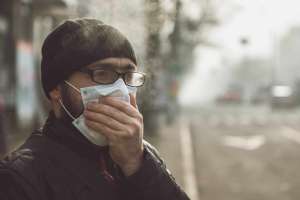
Hyderabad is witnessing a sharp decline in air quality following Diwali celebrations, with the city’s Air Quality Index (AQI) reaching 230, placing it in the “Severe” category. The spike in pollution levels has been largely attributed to firecracker emissions, combined with calm weather conditions that prevented pollutants from dispersing.
Pollution Levels Rise Across the City
According to official air quality monitoring data, several areas recorded dangerous pollution levels on Monday morning.
-
Koti topped the list with an AQI of 289,
-
followed by Teachers Colony (279), Ramachandrapuram (276), Kukatpally (274), and Vittal Rao Nagar (271).
Out of 26 monitoring stations, 20 locations reported “Severe” air quality, while six others showed “Unhealthy” conditions (AQI between 151–200). See the data below.
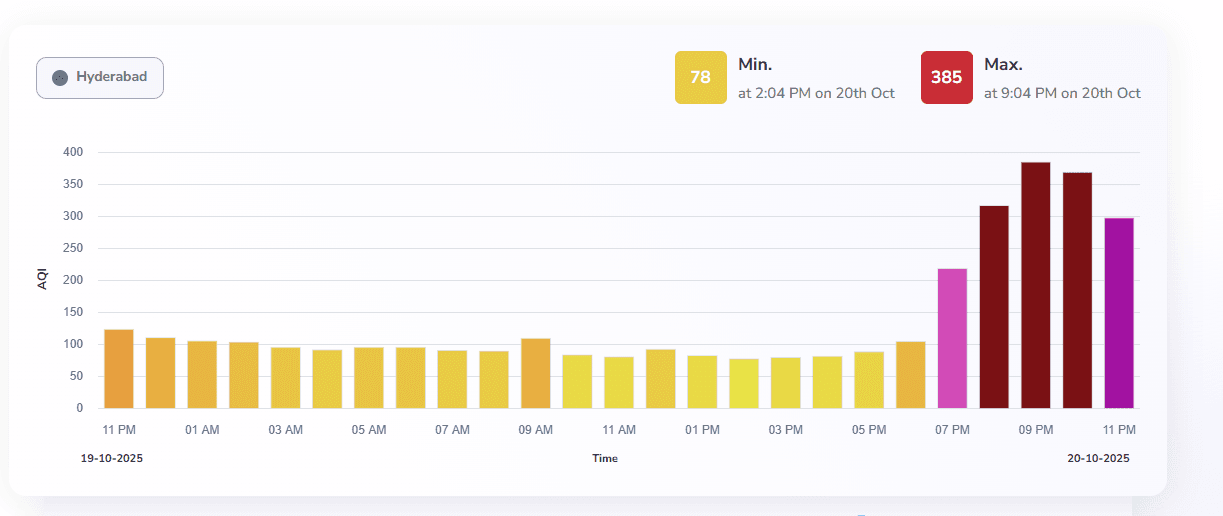

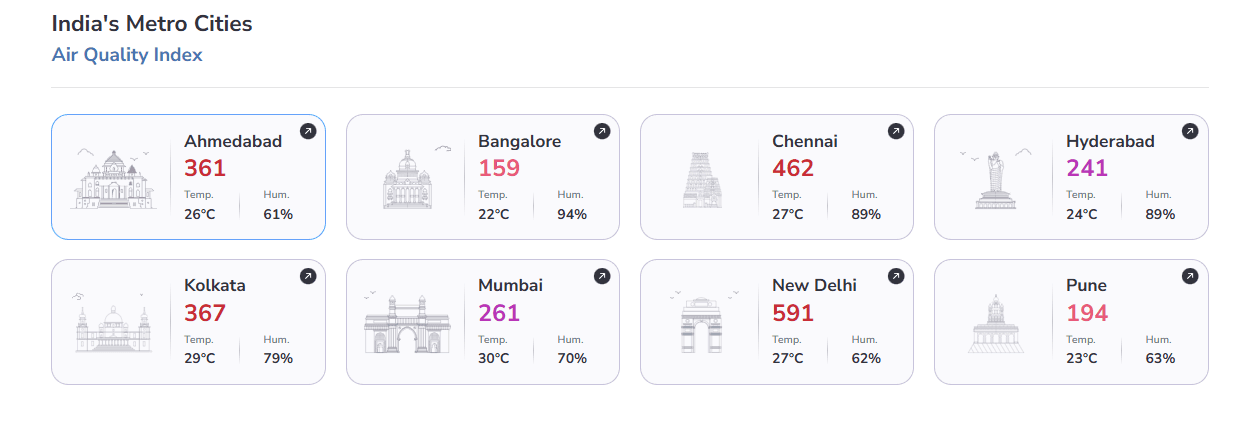
The Above Data is based on AQI as on 20th October 11:30PM
PM2.5 Levels Exceed Safe Limits
Fine particulate matter (PM2.5) averaged 155 µg/m³ — over six times the World Health Organization’s safe limit of 25 µg/m³. The highest concentration was observed in Koti at 214 µg/m³.
PM10 levels also remained high at an average of 197 µg/m³, nearly double the national standard of 100 µg/m³.
Weather Conditions Worsen Situation
Meteorologists say the current weather has aggravated the pollution. With low wind speeds (around 9 km/h), high humidity (89%), and misty conditions, pollutants have remained trapped near the ground. The temperature in most parts of the city hovered around 24°C, preventing upward dispersion of smoke particles from firecrackers.
Health Advisory Issued
Health experts have urged residents to take precautions, especially children, senior citizens, and those with respiratory or heart conditions.
Precautionary Measures:
-
Avoid outdoor exercises or morning walks for the next few days
-
Keep windows and doors closed to limit indoor pollution
-
Use N95 masks when stepping out
-
Run air purifiers indoors, if available
-
Stay hydrated and consume foods rich in Vitamin C
Doctors have warned that short-term exposure to such pollution can trigger coughing, throat irritation, asthma attacks, and breathing discomfort, while long-term exposure could worsen respiratory and cardiac ailments.