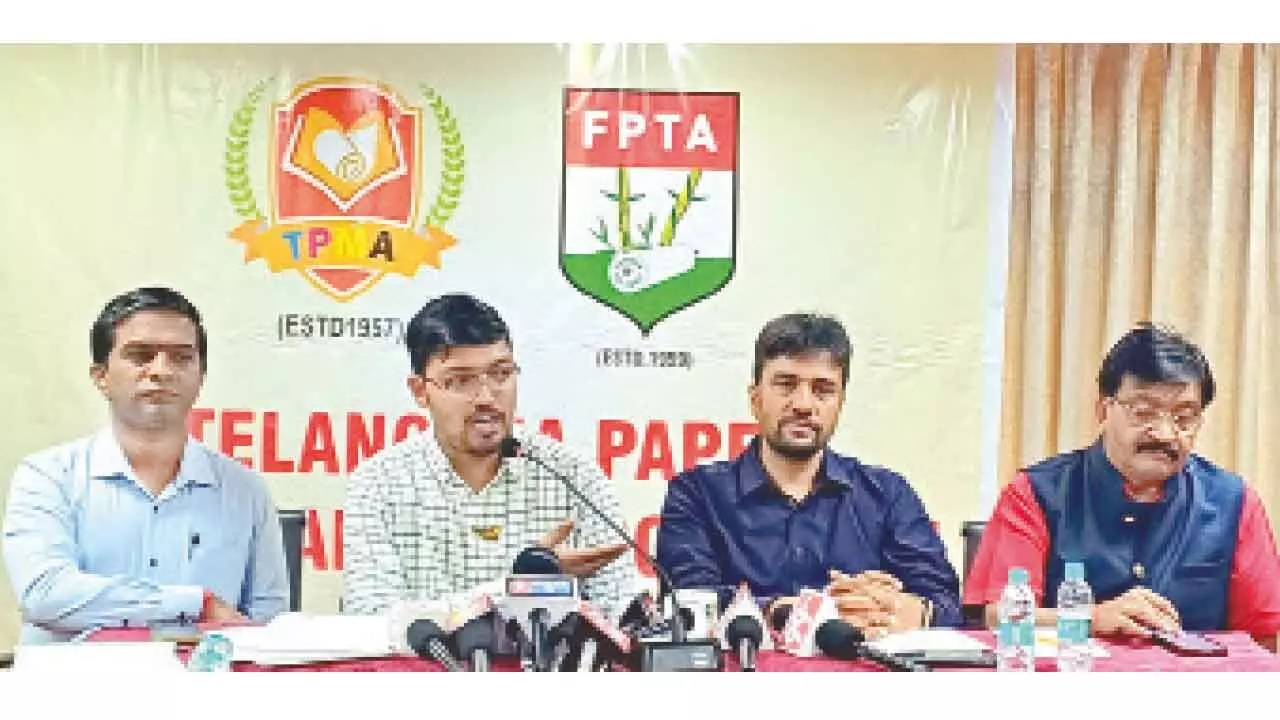
Hyderabad: The Telangana Paper Merchants’ Association (TPMA) has urged the government to reduce the Goods and Services Tax (GST) on paper and boards from 18% to 5%. They argue that paper is crucial for education and sustainability, not a luxury item.
TPMA leaders, including President Abhishek Vijayawargi, Secretary Ashish Jain Bhansali, Past President T. Kishan Singh, and Federation of Paper Traders Associations of India Vice President Nirmal Kuhad, spoke about how the high GST affects students, publishers, and packaging industries.
Mr. Vijayawargi stated, “Paper is essential for learning and sustainability. Taxing it at 18% is economically unfair and socially harmful.”
They explained that under the current GST, Rs 70/kg paper costs Rs 82.60/kg, while at 5%, it would cost Rs 73.50/kg. This increase raises prices for notebooks, textbooks, and packaging materials.
TPMA highlighted that recycled wastepaper is taxed at 5%, but finished paper at 18%, which discourages recycling. With 71% of paper made from recycled materials, this creates compliance issues and affects sustainability.
Students, especially those preparing for competitive exams, use a lot of paper. The GST increase impacts 24 crore children and youth, opposing the government’s goal of inclusive education. The press meet pointed out that paper bags, considered eco-friendly, are taxed at 18%, making them more expensive than plastic bags. Similarly, paper for medicine packaging is taxed higher than the medicines.
TPMA suggested India’s tax policy should follow global standards, where educational and sustainable paper is taxed minimally or not at all.
The association also noted inconsistencies in GST for notebooks and textbooks. Notebooks are tax-exempt, but the paper to make them is taxed at 18%, causing confusion and misclassification issues.
Kuhad commented, “Taxing textbooks at 18% while notebooks are exempt is irrational and discourages education.”
TPMA proposed a single GST rate of 5% for all educational and sustainable paper, which would resolve classification issues and make paper affordable for students and families. They concluded by asking policymakers to view paper as a public good and adjust the GST structure to promote education, sustainability, and industry development.