A string of technology disruptions and major international developments drew attention on November 17–18, 2026. Apple users faced widespread service problems, a supply-chain cyberattack exposed website visitors to malware, and Ukraine claimed a strike that damaged the Kerch Bridge, which links Russia to Crimea.
On November 17, Apple services faced disruptions across several platforms. These included iCloud sign-in, the App Store, Apple Music, Apple Pay, Apple Support and AppleCare. Downdetector logged spikes of thousands of reports. Users said they could not log in, download apps, activate new devices, make payments or play music. Some retail store systems were also affected, which hindered purchases.
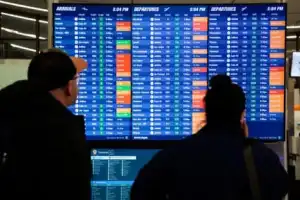
Apple said the problems were caused by an internal update. The company said many systems were recovering and that work continued on the rest. It denied any link to a cyberattack. The outage followed recent glitches involving Microsoft Outlook, the FAA’s air traffic systems and Chase Bank, which blamed a software bug. Separately, Apple faces an upcoming trial in France over claims of planned obsolescence tied to limits on iPhone repairs outside authorized networks. The claims cover models from the iPhone XS through the iPhone 15 series and the 2022 SE. Apple has strongly contested them.
A separate supply-chain attack hit the website experimentation platform Optimizely. Attackers injected malicious JavaScript into scripts serving at least 178 organizations. Report URI found 188 infected scripts out of 1,611 it checked. Affected sites included CNN, BBC, Fox News, Zoom, Salesforce, GitLab, HSBC, Equifax, IKEA, Air France-KLM and Peacock. US media sites served the code to visitors on November 16.
The malware was built to swap cryptocurrency wallet addresses, skim payment card details, and steal cookies and screenshots. It also delivered iOS exploit kits, including Coruna and DarkSword, aimed at older iPhones and iPads running about iOS 18.6 or earlier. Researchers traced roughly $7,000 in crypto to related wallets, though the full impact is unclear. Optimizely confirmed the incident, fixed the exploited flaw in its experimentation account flow, removed the code and notified customers. The scripts were largely cleaned within about a day. The affected companies’ own core systems were not necessarily breached, as the attack used trusted third-party delivery.
In the war with Russia, President Volodymyr Zelenskyy called the strike on the Kerch (Crimean) Bridge an “unprecedented” multi-stage operation. It spanned weeks and included preparatory strikes on air defenses, radars and electronic warfare systems. Ukrainian sources said a major road arch and span collapsed into the strait, cutting the road link, and that the railway section was preliminarily damaged. Weapons cited included Palianytsia missile-drones, Neptune missiles, and Ruta and FP-5/Flamingo drones. Russian-installed Crimean authorities confirmed traffic suspension and reported casualties. Russia has indicated plans to repair the structure.
The strike came just ahead of a planned trilateral summit in Shenzhen involving Donald Trump, Xi Jinping and Vladimir Putin. Trump arrived in the Philippines for the ASEAN summit as part of a short Asia trip. Reports also noted an Iranian drone targeting a US-linked radar site in Bahrain, which was intercepted with no casualties. US intelligence assessments pointed to possible Iranian plots involving dirty bombs or chemical weapons against senior Trump administration officials in Washington. Apple said on November 17 that many of its systems were recovering, and Optimizely confirmed it had removed the malicious code and notified customers.