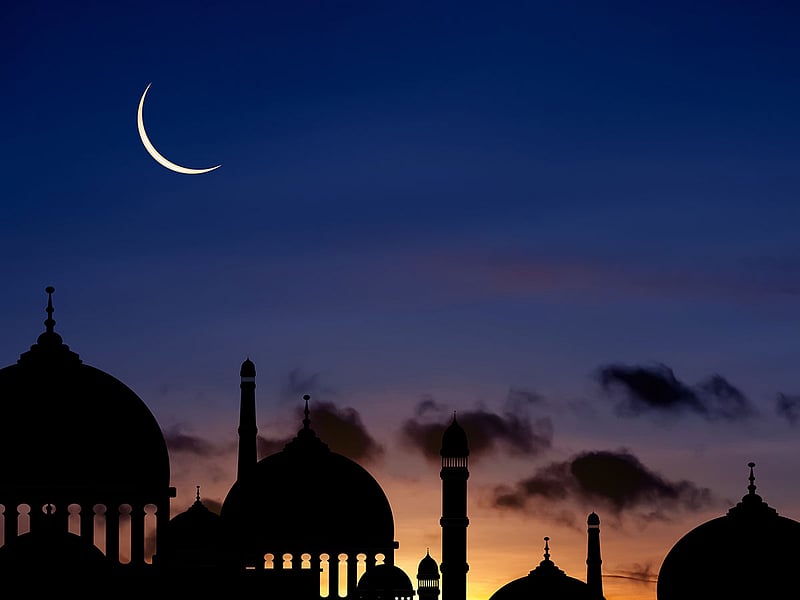
Hyderabad: The Central Ruet-e-Hilal Committee of the Deccan Muslim Ulema Council has announced that Eid-ul-Fitr 2026 will be celebrated across India on Saturday, March 21, after the crescent moon of Shawwal was not sighted on Thursday evening. With no confirmed reports of moon sighting from any part of the country, it has been decided that the ongoing holy month of Ramzan will complete 30 days.
The announcement came after a meeting held in Hyderabad, where scholars and committee members reviewed inputs from different regions before arriving at the final decision in accordance with Islamic principles and verified testimonies. The committee, which plays a crucial role in determining Islamic calendar events in India, had earlier urged citizens to participate in the moon sighting process and report any credible sightings.
Eid-ul-Fitr marks the end of Ramadan, a sacred month observed by Muslims through fasting from dawn to dusk, increased prayers, and acts of charity. The festival begins with special Eid prayers offered in mosques and large open grounds, followed by visits to relatives and friends, sharing of festive meals, and the distribution of charity known as Zakat al-Fitr, which ensures that the less fortunate can also take part in the celebrations.

Preparations for Eid are already underway in several cities, including Hyderabad, where markets have witnessed a surge in activity. From clothing and footwear to traditional sweets like sheer khurma, households are gearing up for the festival with enthusiasm. Authorities are also making arrangements for the smooth conduct of Eid prayers at designated grounds and mosques across the city.
Across the world, however, the date of Eid al-Fitr varies depending on local moon sighting practices. In Saudi Arabia, the crescent moon was also not sighted, and the country is expected to complete the fasting period before announcing Eid. Gulf nations such as the United Arab Emirates, Qatar, and Kuwait generally follow Saudi Arabia’s official announcements, resulting in synchronized celebrations across the region.
In South and Southeast Asia, countries like Pakistan, Bangladesh, Indonesia, and Malaysia rely on their own moon sighting committees or astronomical calculations. This often leads to Eid being celebrated a day later than in the Middle East. For instance, Indonesia, home to the world’s largest Muslim population, typically confirms Eid based on a combination of scientific data and physical moon sightings.
In Western countries such as the United States, United Kingdom, and Canada, Muslim communities follow a mix of approaches. Some organizations rely on local moon sightings, while others align with Saudi Arabia’s announcement for convenience and unity. As a result, Eid celebrations in these countries may vary even within the same city.
Despite these regional differences in moon sighting practices, the essence of Eid-ul-Fitr remains universal. The festival symbolizes gratitude, generosity, and togetherness, bringing families and communities together after a month of spiritual reflection. Mosques and community centers around the world host large congregational prayers, while charitable initiatives see increased participation during this period.
As India prepares to celebrate Eid on March 21, the focus remains on maintaining the spirit of unity and compassion that defines the festival. With the conclusion of Ramadan, people look forward to a day of joy, prayer, and shared celebration with loved ones.