
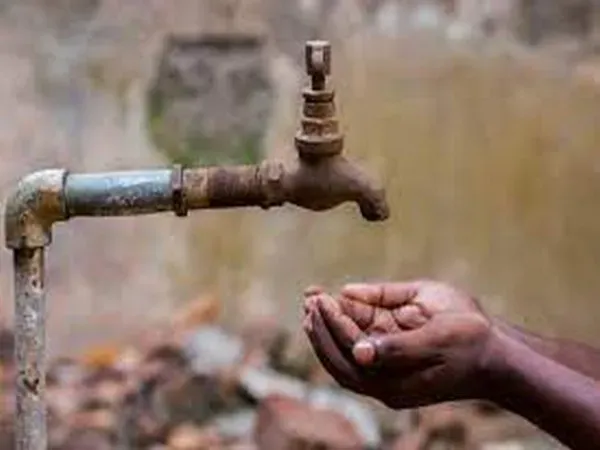
Hyderabad is facing an acute drinking water shortage, and the Hyderabad Metropolitan Water Supply and Sewerage Board (HMWSSB) has declared a water emergency. The city’s 1.5 crore residents are affected by irregular water availability, rising agricultural and industrial demand, and a monsoon deficit linked to El Niño. Data from the state irrigation department shows that over half of Telangana’s 600-plus mandals are hit by drought. Water remains in about 500 of more than 6,000 lakes statewide.
Only three of Hyderabad’s 16 mandals have received adequate rainfall, so many residents depend on paid water tankers. Around 6,000 to 8,000 tankers are booked every day. The HMWSSB Managing Director Ashok Reddy has told officials to start additional tanker operations and begin the registration process. Areas including Secunderabad Cantonment and the city outskirts report major shortages, with drinking water supplied only once every three or four days.
Water levels in the city’s main sources have dropped sharply. Osman Sagar has fallen from its full capacity of 3.5 TMC to 2.2 TMC, and Himayat Sagar from 2.5 TMC to 2.1 TMC. Singur, with a capacity of 29.9 TMC, has 3.4 TMC left. Nagarjuna Sagar holds 184.2 TMC against a capacity of 312 TMC. The Water Board said a few reservoirs may run out of usable water between mid-December and the end of December. Ashok Reddy said the board is moving from its alternate-day supply to a routine of once every three days for major parts of the city to conserve remaining water.
The HMWSSB is conducting a water audit to assess groundwater levels across all 16 mandals. Jayesh Ranjan, Special Chief Secretary for the Hyderabad Metropolitan Area, has told officials to conserve water and electricity. The board is exploring more supply from the Godavari Drinking Water Scheme and additional Krishna water. It is also considering new filter beds at Himayat Sagar and Osman Sagar, and the use of treated wastewater for construction, landscaping and industry. Chief Minister Revanth Reddy and senior cabinet members held an emergency meeting to review measures to maintain drinking water supply in the coming months.
Several conservation steps are under way:
- The board will launch “green water tanker” services on November 1, supplying treated wastewater for construction, landscaping and other non-drinking uses.
- Volunteers can report water issues through the PAANI app.
- Officials have been asked to limit permissions for borewells meant for construction and other non-drinking purposes, while existing borewells can be deepened.
- Misuse of drinking water carries a Rs 1,000 fine for first-time offenders, with higher fines for RWAs and homeowners who let tanks or pumps overflow. Repeat violations may lead to steeper penalties or permanent disconnection under the HMWSSB Act, 1989.
- The United Federation of Resident Welfare Associations (UFERWAS) launched its seven-point “Every Drop Counts” programme in Hyderabad and Cyberabad, which includes cutting water use for landscaping and using recycled water for washing cars and cleaning yards.
Chinmayee Mokshagundam, a senior architect at Akarmaa Foundation, said more than 150 step wells within the ORR limits are replenished by underground aquifers but have become garbage dumps. She said reviving the roughly 400-year-old stepwells could cut the city’s water crisis by at least 50 per cent. Urban Development Forum head M Srinivas said the measures came too late, adding: “With little coordination between the irrigation, agriculture, industries, and the municipal departments, all the constituents are suffering.”
