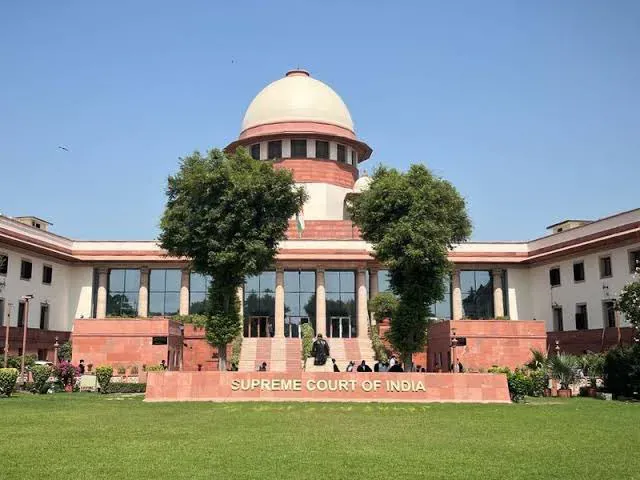
The Supreme Court of India has ruled that a grandson has no birthright in property his living father received as his share after the grandfather’s estate was partitioned among Class I heirs. The judgment in J. Rajesh (Minor) v. M. Kumaran (2026 INSC 1208) was delivered on November 6, 2026. It clarifies inheritance rights under the Hindu Succession Act, 1956.
A bench of Justices Augustine George Masih and Sunita Agarwal heard the matter. The judgment was authored by Justice Sunita Agarwal. The Court held that when a Hindu male dies intestate, his property devolves under Section 8 of the Act on Class I heirs such as sons, daughters and the widow. Once that property is partitioned, the share given to the father becomes his exclusive individual property. It does not remain joint family or coparcenary property for the next generation.
The dispute concerned a plot of about 1,811 sq ft in Chennai, which belonged to the late N. Ramakrishnan. After his death, the property was partitioned among his Class I heirs through a 1994 compromise decree. The father received his share and sold it in 1997. The minor grandson, acting through his mother, then filed a suit claiming a half share as a coparcener by birth.
The Court rejected this claim. It noted that a grandson is not a Class I heir while his father is alive. He therefore cannot claim a share by birth in what his father inherited and received on partition. The bench relied on the earlier precedent in CWT v. Chander Sen (1986).
The Supreme Court dismissed the appeal and upheld the father’s absolute ownership of the partitioned share. The ruling draws a clear line between true ancestral or coparcenary property and property that has devolved and been partitioned under Section 8. The latter is treated as the absolute property of the inheriting son.