
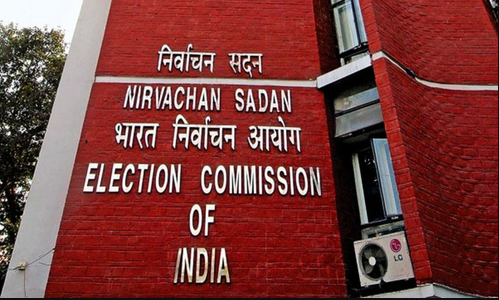
The Election Commission of India (ECI) has issued an important clarification regarding Family Register Certificates (FRC) in Telangana, stating that certificates issued after July 25, 2026 will not be accepted during the ongoing Special Intensive Revision (SIR) of electoral rolls. The decision affects the verification process currently underway in the state, as the new certificates issued through the MeeSeva mechanism do not meet the ECI’s verification standards. However, Family Member Certificates issued before this date will continue to be valid for the electoral roll revision process.
In a letter addressed to Telangana Chief Electoral Officer C Sudarshan Reddy, ECI Secretary Navin Kumar explained the rationale behind the decision. The clarification focuses on the significant difference in the issuance mechanism between the old and new systems. Under the previous system, Family Member Certificates were issued by the Tahsildar after a thorough verification process that included cross-checking documents and conducting local inquiries to ensure authenticity.
The situation changed when the Telangana government issued orders on July 25, 2026, introducing a new mechanism for issuing FRCs through the MeeSeva portal. According to the government order GO MS No. 172, the new FRCs are issued within two days of application without any verification process. The certificates are generated based on data electronically fetched from the Food Security Card (Ration Card) database, with no independent verification procedure before issuance.
The ECI Secretary emphasized that there is an evident difference between the manner in which Family Member Certificates were issued under the old regime compared to the new system. Since the new FRCs lack independent verification, they are essentially equivalent to a ration card, which does not form part of the designated documents approved for the SIR process. The Telangana government itself clarified in its letter that the new GO has no bearing on and is completely delinked from the Special Intensive Revision of electoral rolls currently underway in the state.
The Special Intensive Revision process requires specific designated documents for verification purposes to maintain the integrity of the electoral rolls. The ECI has established strict guidelines for acceptable documents to prevent fraudulent entries and ensure that only genuine voters are registered. The new FRC system, which relies solely on electronic data from ration card databases without manual verification, does not meet these stringent requirements set by the election authority.
The ECI Secretary also referenced the Supreme Court decision while upholding the constitutional validity of the SIR process in Bihar, which approved the list of documents prescribed by the ECI under the SIR rule. This legal backing strengthens the commission’s position on maintaining strict verification standards during electoral roll revisions. The clarification ensures that the electoral roll revision in Telangana continues to follow the established protocols approved by the highest court in the country.
