
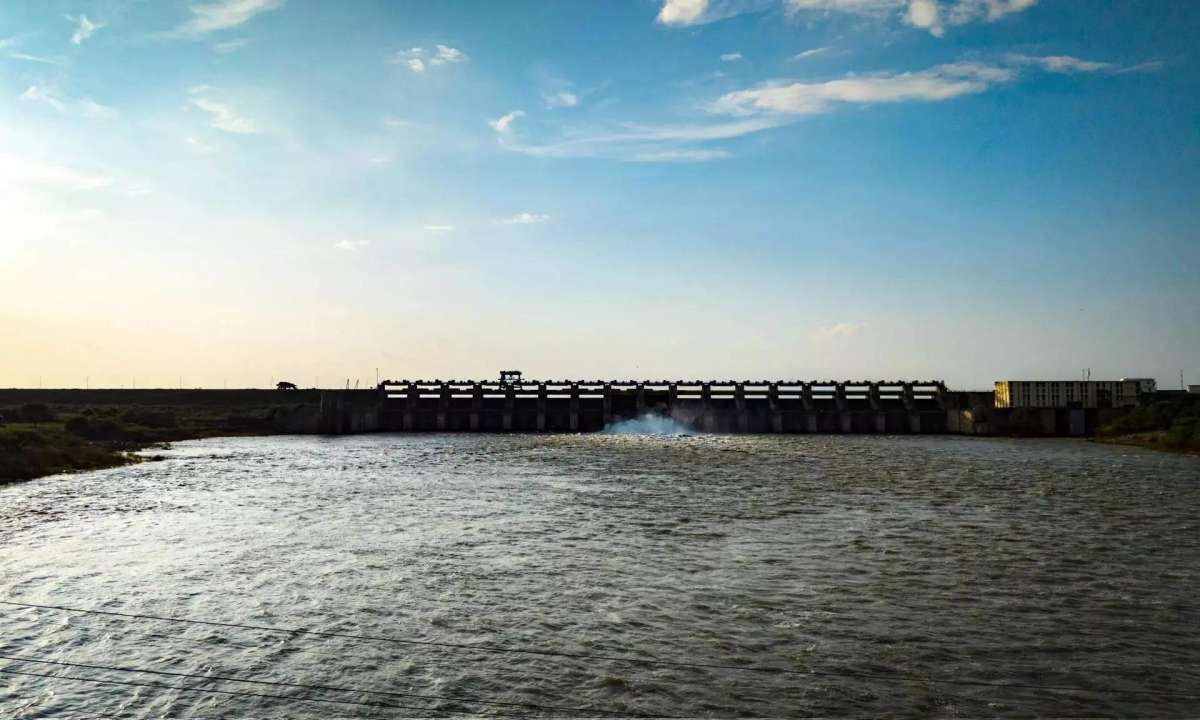
The Singur reservoir has only around 50 days of water remaining, prompting the Hyderabad Metropolitan Water Supply and Sewerage Board (HMWSSB) to initiate emergency measures. The Board has directed officials to prepare contingency plans, strengthen tanker operations and develop alternative water supply strategies to ensure uninterrupted drinking water supply in case the monsoon fails. Managing Director Ashok Reddy, IAS, chaired a high-level review meeting at the HMWSSB headquarters in Khairatabad on Tuesday to address the looming water crisis.
During the meeting, Ashok Reddy instructed officials to prepare a comprehensive action plan to meet Hyderabad’s future drinking water requirements as the Board expands its services up to the proposed CURE limits. He emphasized that additional water is expected to become available over the next one to two years through the Godavari project and the Osman Sagar–Shaikpet system. Officials were directed to prepare infrastructure plans in advance by identifying reservoirs, pipelines, pumping stations, valves, junctions and other facilities required to distribute the additional water efficiently.
The Managing Director ordered officials to identify localities that faced severe water shortages during the previous summer and prepare area-specific contingency plans before the next summer season. The plans must be finalized within 15 days, with all critical works targeted for completion by October. Officials were instructed to formulate multiple contingency scenarios based on water availability in the Singur and Manjeera reservoirs. If rainfall remains inadequate, the Board should be prepared to implement alternate-day or phased water supply wherever necessary.
Ashok Reddy stressed that contingency plans should not remain on paper but should clearly identify how water can be diverted between supply zones, along with the infrastructure required to execute the plans. Officials were directed to complete estimates, float tenders and begin works within the next 15 days. The MD also asked officials to maximize the use of alternative water sources, including the Krishna and Godavari rivers, besides Osman Sagar and Himayat Sagar. He assured that funds would not be a constraint for creating temporary pumping facilities, filtration units or other infrastructure needed to maintain an uninterrupted water supply.
The Board has identified newly emerging water-stressed areas in the Malkajgiri Municipal Corporation limits for special attention. Officials were directed to establish dedicated filling stations for high-capacity tankers and introduce faster water-filling systems to improve emergency supply during peak demand. Emphasizing the importance of tanker operations, the MD ordered daily monitoring of online bookings, tanker movements, deliveries and trip records. He warned that negligence in tanker management or failure to enforce operational standards would invite show-cause notices and departmental action against responsible officials.
To reduce pressure on drinking water sources, the Water Board plans to significantly expand the use of treated water. Government departments, private institutions, stadiums, prisons, gated communities and private sewage treatment plants will be encouraged to use treated water for landscaping, construction and other non-potable purposes. The HMWSSB will also prepare a policy to supply treated water from its STPs through registered tankers supported by an online booking system and uniform pricing. According to the MD, increasing treated water usage by just two percent could save an equivalent quantity of potable water for emergency requirements.
The Managing Director reiterated that there would be zero tolerance for contaminated water supply. Every complaint relating to water quality must be attended to immediately. If contamination is suspected, supply should be stopped, alternative water should be provided through tankers and regular supply resumed only after water quality tests confirm that it is safe. Ashok Reddy stated that Hyderabad’s growing population and expanding service limits require long-term planning, scientific water management and effective utilization of alternative water resources to ensure a sustainable drinking water supply in the years ahead.
