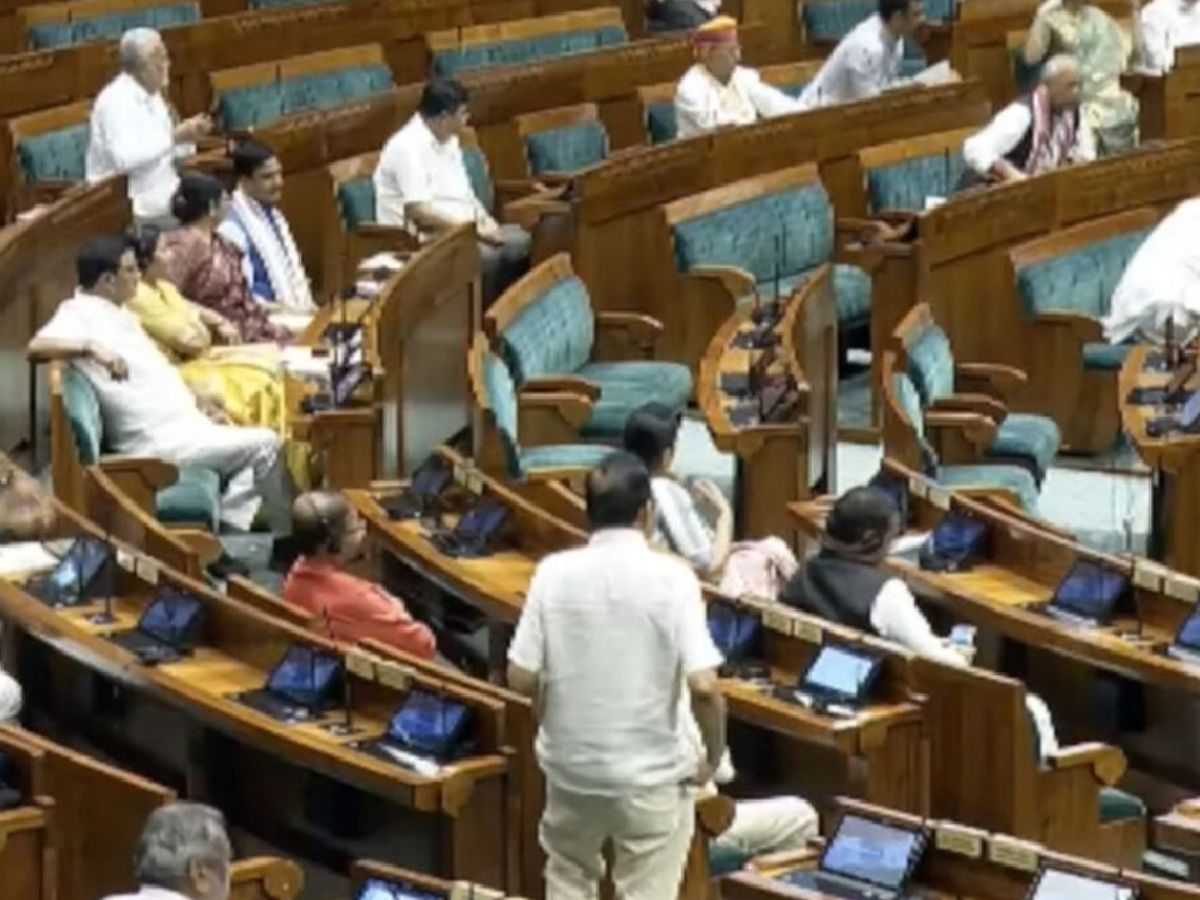
New Delhi, July 31: The Lok Sabha on Friday passed the Registration of Births and Deaths (Amendment) Bill, 2026, marking another significant legislative development during the ongoing Monsoon Session of Parliament. The bill was approved despite repeated disruptions and protests by Opposition members, who demanded a discussion on recent student demonstrations and alleged police action before legislative business proceeded.
The amendment aims to modernize India’s civil registration system by strengthening the process of recording births and deaths across the country. According to the government, the legislation seeks to improve the accuracy of official records, enhance coordination between state and central authorities, and support the delivery of public services through a more efficient and reliable database.
Parliamentary proceedings witnessed continuous slogan shouting and protests from Opposition MPs, leading to multiple interruptions throughout the day. Despite the disruptions, the government moved ahead with the legislative agenda and secured the bill’s passage without an extended debate in the House.

Government leaders described the amendment as an important administrative reform that will help improve governance, policy planning, and the implementation of welfare schemes by ensuring more accurate demographic data. Officials also stated that a modern registration framework would enable faster access to essential public services and strengthen India’s digital governance initiatives.
However, Opposition parties criticized the manner in which the bill was passed, arguing that Parliament should first address concerns related to recent protests before taking up major legislation. The continued standoff between the government and Opposition has affected proceedings throughout the Monsoon Session, resulting in frequent adjournments and heated exchanges inside both Houses.
The passage of the Registration of Births and Deaths (Amendment) Bill, 2026 reflects the government’s continued push to advance its legislative agenda despite political disagreements. As the bill moves forward, attention will now shift to its implementation and the impact it may have on improving the efficiency, transparency, and accessibility of India’s civil registration system.