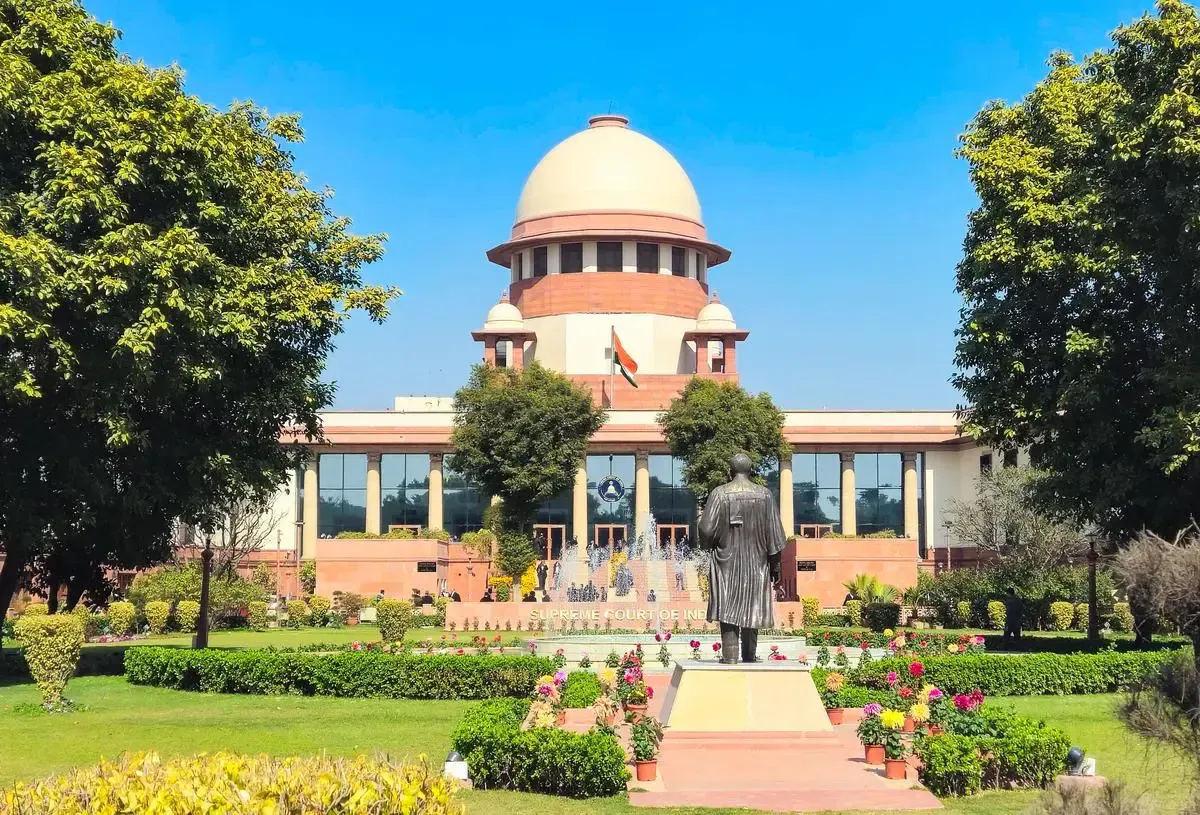
The Supreme Court has ruled that courts must first examine the relationship between a builder and the lending bank, including how a housing loan was disbursed, before directing homebuyers to pay loan instalments in recovery proceedings. The Court said interim directions for payment of EMIs cannot be issued unless homebuyers are first found to be in default. That finding must follow an examination of whether the bank released the loan in line with the tripartite agreement.
A bench of Chief Justice Surya Kant, Justice Joymalya Bagchi and Justice V Mohana passed the order. It was hearing a writ petition by homebuyers of the Krishna Housing Scheme in Sohna, Gurugram, developed by Raheja Developers Limited. The Court protected the petitioners and other similarly placed homebuyers from coercive recovery action. It stressed that the competent court must first decide whether there was any nexus between the builder and the bank authorities.
The Court directed the Civil Court not to take coercive action against the petitioners or similarly placed homebuyers until this issue is examined and decided. It also said no interim direction to pay instalments can be issued without a categorical finding that the homebuyers were actually in default.
The dispute stems from a tripartite agreement among the homebuyers, the State Bank of India (SBI) and Raheja Developers for housing loans on the project. Under the agreement, loan disbursement was linked to construction progress. The homebuyers allege that Raheja Developers failed to meet its commitments. They also allege that SBI kept releasing loan amounts to the developer even though construction had not progressed accordingly.
In August 2025, Raheja Developers entered the Corporate Insolvency Resolution Process (CIRP). During the proceedings before the National Company Law Tribunal (NCLT), the developer offered to refund the homebuyers’ payments in six monthly instalments. Meanwhile, SBI filed recovery suits against the homebuyers before the Commercial Court at Saket Courts, Delhi, which passed interim directions requiring them to pay loan instalments. The homebuyers then moved the Supreme Court, which granted protection without expressing any opinion on the merits of the dispute.
The Supreme Court had given similar interim protection in 2024 to homebuyers in stalled housing projects in Delhi-NCR. It restrained banks, financial institutions and builders from coercive recovery measures, and the protection extended to cheque dishonour proceedings. The Court had raised concerns over an alleged builder-bank nexus and indicated the need for an investigation by a Special Investigation Team (SIT) or the Central Bureau of Investigation (CBI). In April 2025, it directed the CBI to register seven preliminary enquiries. With the Court’s permission, the CBI later registered 28 regular cases covering several projects, including some outside the NCR. After chargesheets were filed, the Court directed the concerned Metropolitan Magistrates to proceed in accordance with law. The case is titled Ravi Kumar Jangra and Anr. v. Union of India and Ors., W.P.(C) No. 1415/2026.