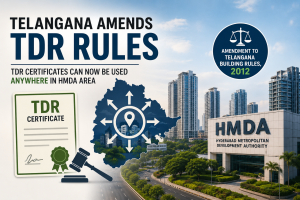
Hyderabad: The implementation of the Transferable Development Rights (TDR) policy in Hyderabad has led to a sharp rise in prices, with developers and industry stakeholders flagging concerns over hoarding, price manipulation, and lack of transparency in the market.
Originally designed to support urban development and compensate landowners, the policy is now under scrutiny as TDR rates have reportedly surged from around 25% earlier to as high as 70% in recent months.
Sharp Price Rise Raises Red Flags
Market data indicates that while bulk buyers are still transacting at around 56%, the overall spike has raised questions about artificial scarcity and speculative trading. Industry experts believe that the sudden jump is not entirely driven by demand but may be linked to concentration of TDR in the hands of a few players.
Key Highlights of the New Policy
Under the revised TDR framework:
- High-rise constructions (10–20 floors) require 3% of built-up area through TDR
- Buildings above 20 floors must allocate 5% via TDR
- Developers must submit 50% of TDR at the application stage and the remaining before occupancy certificate
- For non-high-rise projects, TDR can be used for setback relaxations
These provisions have increased dependency on TDR, thereby influencing pricing trends across the real estate sector.
Market Snapshot Shows High Availability
According to available data:
- TDRs have been issued to 1,967 individuals
- Approximately 1,070 acres are covered under TDR allocations
- Out of this, around 712 acres have been utilised, while 316 acres remain available
- The total estimated value of available TDR stands close to ₹9,000 crore
Despite this large supply, prices continue to rise, leading to concerns about market imbalance.
Concerns Over Hoarding and Benami Deals
Developers have raised serious concerns about alleged hoarding of TDRs by broker networks and influential investors. There are also claims of benami transactions, with reports suggesting that a single individual may have accumulated TDR assets worth nearly ₹600 crore.
Additionally, it is alleged that some brokers are accessing details of TDR beneficiaries through municipal channels and directly approaching landowners, further distorting fair market practices.
What is TDR?
Transferable Development Rights (TDR) is a mechanism that allows landowners who surrender land for public purposes to receive additional development rights. These rights can be used on other properties or sold to developers who require extra built-up area.
While the concept is aimed at enabling planned urban growth and infrastructure expansion, its implementation now faces challenges linked to pricing and distribution.
Industry Calls for Intervention
Real estate stakeholders are urging the government to take steps to ensure transparent trading, fair distribution, and strict action against illegal hoarding. Experts believe that unless corrective measures are introduced, the policy risks turning into a speculative marketplace rather than a development tool.
With rising concerns from builders and investors alike, the coming months are expected to be crucial in determining how the TDR ecosystem evolves in Hyderabad.