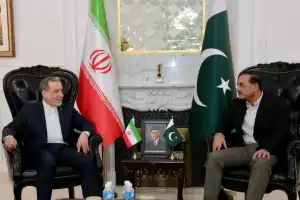
Six weeks into the US-Iran war, the conflict in West Asia does not seem to be slowing down. After the failed negotiation in Pakistan on Friday, the United States has declared a naval blockade on Iranian ports. The move came into effect on Monday at 10 AM ET (7:30 PM IST). This development has further escalated tensions between the two countries, while the two-week ceasefire is still in effect.
US declares naval blockade on Iranian ports
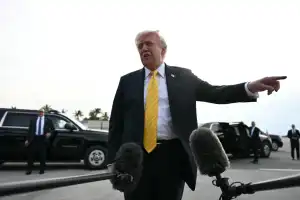
US President Donald Trump initially announced that, effective immediately, the US Navy would prevent any ships from passing through the Strait of Hormuz. This was in response to the failed peace talks held in Islamabad, where both countries failed to reach an agreement. Later, the US clarified that the naval blockade will apply to ships coming in and out of all Iranian ports. He warned that “if any of these (Iranian) ships come anywhere close to our blockade, they will be immediately eliminated.” He had also accused Iran of ‘extortion’ and declared that the US Navy would hunt down and interdict ships in international waters that have paid Iran a toll for their passage through the Strait of Hormuz.
Iran vows to retaliate
Iran has responded strongly, warning that no ports will be safe if Iranian vessels are attacked. The IRGC spokesperson stated that ‘the security of ports in the Persian Gulf and the Sea of Oman is either for everyone or for no one.’ The two-week ceasefire is supposed to last until April 22; however, Iran has declared that the presence of military ships in the Strait will be considered a ‘ceasefire breach’ and dealt with harshly and decisively.
Wider impact of the naval blockade
This will lead to significant changes in the current scenario. The Gulf countries could once again come under attack if Iranian boats are targeted. The price of oil will continue to rise, having a significant impact on the energy economy. Additionally, China is one of the biggest consumers of Iranian oil. The blockade will increase pressure not just on Iran but also countries with trade ties to Iran. The ceasefire, which is already fragile to begin with, may also collapse. The main aim of this move is to bring Iran back to the negotiating table. A few hours into the blockade, we are yet to see how the US plans to make this effective and what the impacts will be.