Geneva/Tehran/Washington: A major diplomatic breakthrough appears to be taking shape in the Middle East, with the United States and Iran reportedly moving toward a comprehensive peace agreement aimed at ending months of conflict, reopening critical global shipping routes and restarting negotiations over Iran’s nuclear program.
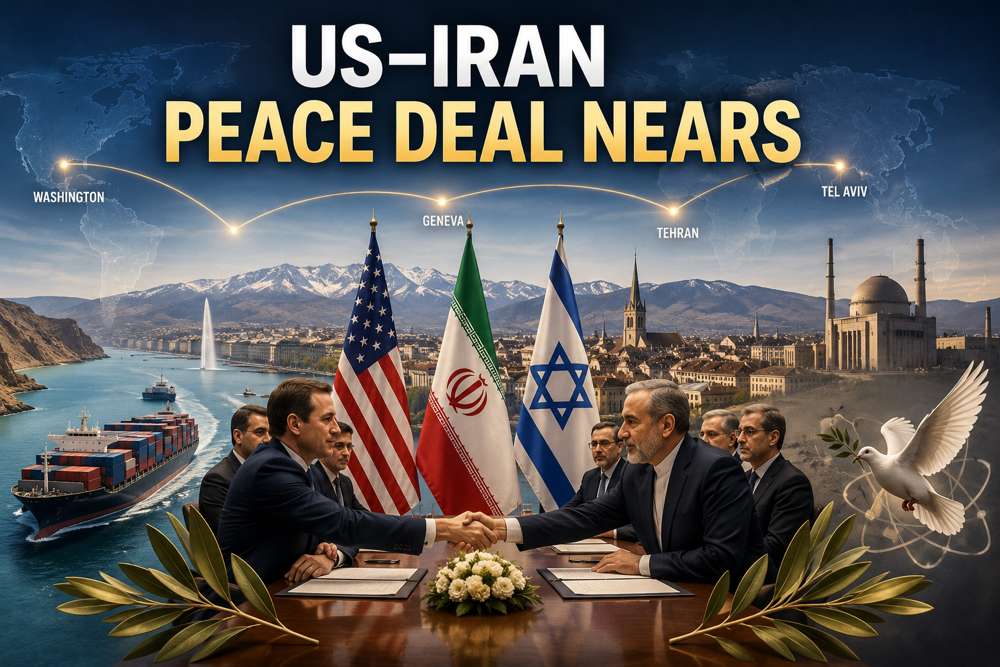
According to reports emerging from multiple international media outlets and officials involved in the negotiations, a draft framework has been agreed upon and a formal signing ceremony is expected to take place in Switzerland on June 19, subject to final approval from all parties.
The proposed agreement follows months of military tensions involving the United States, Iran, Israel and regional armed groups, which disrupted global energy markets and raised fears of a wider regional conflict.

Key Terms of the Proposed Agreement
Officials familiar with the negotiations say the draft framework includes several significant provisions designed to reduce tensions and create a pathway toward a permanent settlement.
- Extension of the current ceasefire for 60 days
- Launch of a 60-day negotiation period focused on Iran’s nuclear program
- Reopening of the Strait of Hormuz to international shipping
- Removal of the US naval blockade on Iranian ports
- Discussions on phased sanctions relief for Iran
- Negotiations regarding the release of frozen Iranian assets
- Commitment to reduce hostilities across multiple regional fronts, including Lebanon
- Framework for a long-term peace and security arrangement
Why the Strait of Hormuz Matters
One of the most important components of the proposed deal is the reopening of the Strait of Hormuz, one of the world’s most strategically important waterways.
Roughly one-fifth of global oil and liquefied natural gas (LNG) shipments pass through the narrow passage connecting the Persian Gulf to international markets. Disruptions in the strait over recent months led to higher oil prices, increased shipping costs and concerns about global energy security.
The reopening of the waterway is expected to ease pressure on energy markets and improve the flow of oil exports from Gulf producers.
Nuclear Program Talks to Begin
The proposed agreement does not immediately resolve disputes surrounding Iran’s nuclear program. Instead, it establishes a dedicated 60-day negotiation period during which technical experts and diplomats will work on a long-term framework.
Negotiators are expected to discuss:
- Limits on uranium enrichment
- Management of enriched uranium stockpiles
- International monitoring mechanisms
- Future inspection arrangements
- Potential sanctions relief tied to compliance
Reports indicate that Iran has signaled willingness to discuss restrictions on its nuclear activities in exchange for economic relief and the unfreezing of overseas assets.
Sanctions Relief and Frozen Assets
Economic issues remain a central component of the negotiations.
Iran has long sought relief from US and international sanctions that have impacted its economy, energy exports and financial sector. Under the proposed framework, Washington would reportedly begin discussions on phased sanctions relief while also considering mechanisms for releasing billions of dollars in frozen Iranian funds held overseas.
However, officials suggest that most economic concessions would be linked to Iranian compliance with future commitments under the final agreement.
Regional Impact
The proposed deal could have far-reaching implications beyond US-Iran relations.
Diplomats believe a successful agreement may help reduce tensions across the Middle East, including in Lebanon and other areas affected by regional conflicts. Mediators involved in the negotiations have reportedly pushed for broader commitments aimed at preventing escalation and encouraging long-term stability.
Several countries, including Pakistan and Qatar, are understood to have played important roles in facilitating talks between the parties.
Challenges Remain
Despite growing optimism, significant hurdles remain before a final agreement is secured.
Questions remain over the exact scope of sanctions relief, verification mechanisms for nuclear commitments, the future of regional armed groups and the timeline for implementing key provisions.
Israeli officials have also expressed concerns regarding certain aspects of the emerging framework, particularly issues related to Iran’s missile capabilities and regional influence.
Global Markets Watching Closely
Financial and energy markets are closely monitoring developments, as a successful agreement could lead to increased oil exports, lower shipping risks and greater stability in global energy supplies.
Investors and policymakers worldwide view the negotiations as one of the most significant diplomatic developments in the Middle East in recent years.
If the agreement is formally signed on June 19 as expected, it could mark the beginning of a new phase in US-Iran relations and potentially reshape the geopolitical landscape of the region.