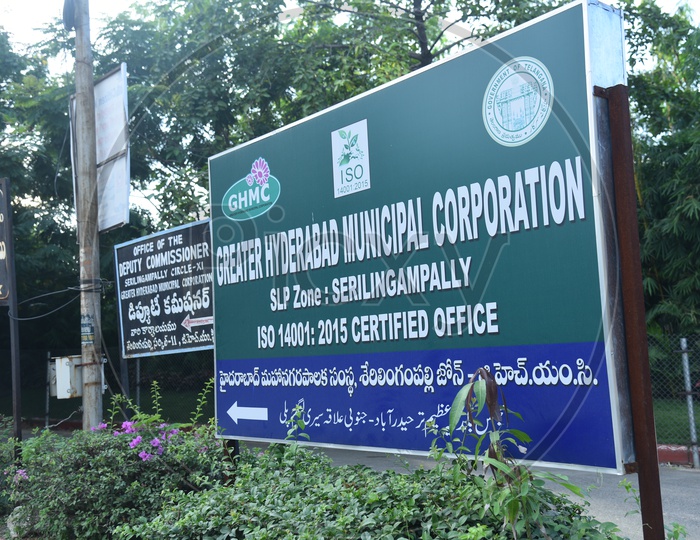
The Anti-Corruption Bureau (ACB), Telangana, conducted a surprise inspection at the Office of the Deputy Commissioner, Serilingampally Circle-49, under the Cyberabad Municipal Corporation on March 6. The inspection revealed significant delays in processing building permissions, inadequate enforcement against unauthorised constructions, and suspicious financial transactions that warrant further investigation. The Rangareddy Range Unit of the ACB carried out the operation based on credible information, examining records, financial transactions, pending applications, complaints, and the overall functioning of the office.
Serilingampally Circle-20 was reorganised from the Greater Hyderabad Municipal Corporation (GHMC) and transferred to the Cyberabad Municipal Corporation on December 2, 2025, after which it was redesignated as Circle-49. Since the reorganisation process is still ongoing, records prior to December 2, 2025, were not available at the Circle-49 office. Consequently, ACB officials limited their verification to records maintained from that date onwards.
Between December 2025 and March 2026, the office received 285 building permission applications. Of these applications, 134 were approved, 21 were rejected, and 63 are currently under process. The remaining applications are at various stages including shortfall notices, fee intimation, or on hold status. Among the 63 applications under process, 16 are pending with the Section Officer, 25 with the Assistant City Planner (ACP), and 22 with the Deputy Commissioner.

The ACB discovered that 21 applications had exceeded the prescribed 21-day processing period. Of these delayed applications, five were pending with the ACP and 16 with the Deputy Commissioner, pointing to delays in decision-making at senior levels. This violation of the stipulated timeline raises concerns about administrative efficiency and possible procedural lapses in the office.
During the same period, the office received 63 complaints regarding unauthorised constructions. While second notices were issued in most cases, 14 files remained pending without further action even after the stipulated time following issuance of the second notice. In 10 cases, second notices were not issued despite the expiry of the prescribed period after the first notice. Four cases are currently pending before the courts. In one instance, although a second notice was prepared, it was not served on the respondent, and the file remained pending.
The ACB also observed that several unauthorised construction cases had remained pending for months, and in some instances for over a year, without final orders or enforcement action. This lack of timely follow-up and poor monitoring of enforcement activities indicates systemic weaknesses in addressing illegal construction activities in the jurisdiction.
During scrutiny of records, officials noticed certain suspicious financial transactions between office staff and private individuals. These transactions have been flagged for further detailed investigation by the concerned authorities. The nature and extent of these financial dealings are yet to be determined through a comprehensive probe.