
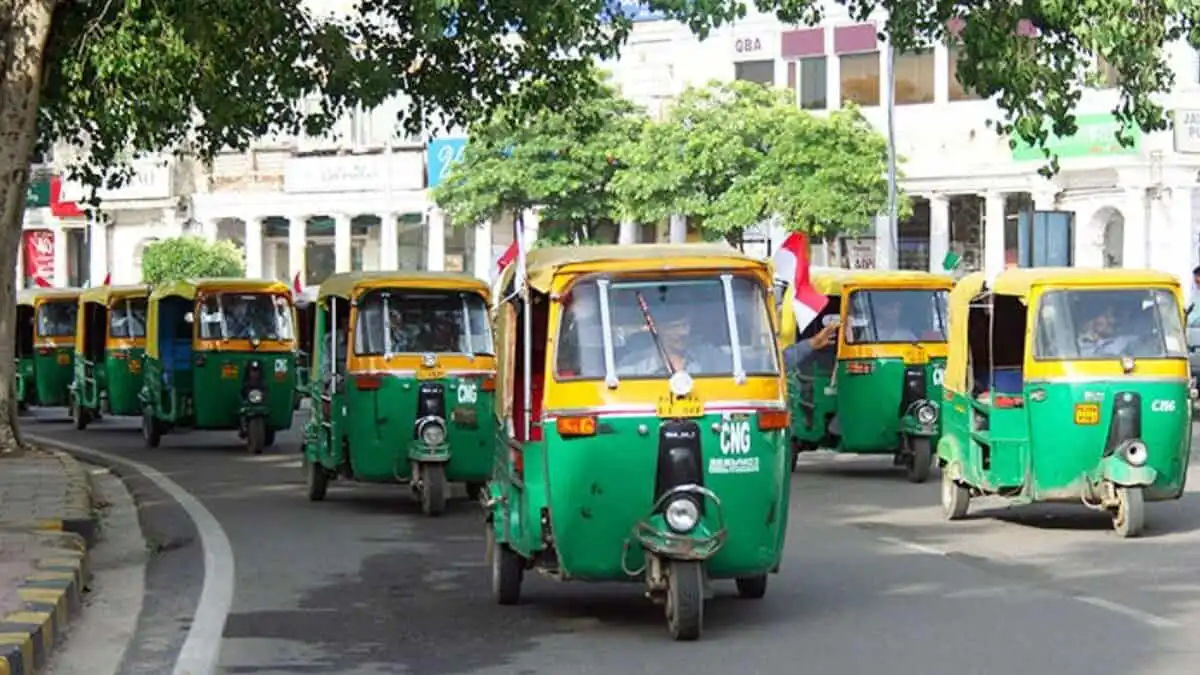
Auto-rickshaw passengers in Hyderabad will soon have to pay more for their daily commute. A state government-appointed committee has recommended raising the minimum fare from ₹20 to ₹30 and increasing the per-kilometer charge from ₹11 to ₹14. The Auto Fare Revision Committee submitted its recommendations to the Telangana government on September 3, and officials are expected to announce a final decision in the coming days. If approved, a 3-kilometer ride that currently costs ₹35.40 will jump to ₹49.60, marking a significant increase for regular commuters across the city.
The proposed fare structure includes a minimum charge of ₹30 for the first 1.6 kilometers, followed by ₹14 for every additional kilometer. The committee has also suggested a waiting charge of 75 paise per minute and night-time charges at 1.5 times the normal fare between 11 pm and 5 am. Additional charges would apply for luggage exceeding 60 cm × 40 cm, with a maximum permissible weight of 100 kg. Small items like briefcases and handbags would remain exempt from extra charges. The proposed revision comes nearly 12 years after the last fare adjustment, which was implemented by the erstwhile Andhra Pradesh government on February 14, 2014.
The fare increase will substantially impact passengers across different journey distances. A 5-kilometer journey will rise from ₹57.40 to ₹77.60, while a 10-kilometer ride will increase from ₹112.40 to ₹147.60. For longer trips of 15 kilometers, passengers will pay ₹217.60 instead of the current ₹167.40. The minimum fare alone represents a 50 percent increase, adding ₹10 to the base cost. The committee calculated the operating cost at ₹13.53 per kilometer after examining vehicle purchase costs, loan expenses, depreciation, fuel prices, repairs, insurance, taxes, maintenance and driver income.
The fare revision process began after auto, cab and school-van drivers’ unions threatened an indefinite strike from midnight on August 23. The unions had demanded fare revisions and relief measures for drivers affected by the free bus travel scheme, with their demands ranging from ₹30 to ₹50 for minimum fares. Transport Minister Ponnam Prabhakar assured the unions that the government would address their concerns and initiate the fare revision process. Following this assurance, the unions withdrew the strike call, and the government constituted the fare revision committee. The minister also promised to examine other welfare measures and steps to support auto drivers facing rising operating costs.
The Transport Department has recommended implementing the revised fares under Section 67(1) of the Motor Vehicles Act, 1988, and cancelling the 2014 fare notification. Auto owners may be given three months to reset their digital meters to the new tariff once the revised fares come into force. During this transition period, every auto-rickshaw would be required to display a tariff card showing both existing and revised fares. However, meter usage remains a major concern in the city, as many auto-rickshaws reportedly do not operate on prescribed meter fares, with drivers and passengers often negotiating directly. Autos linked to aggregator platforms like Uber, Ola and Rapido follow fares determined by their respective platforms.
