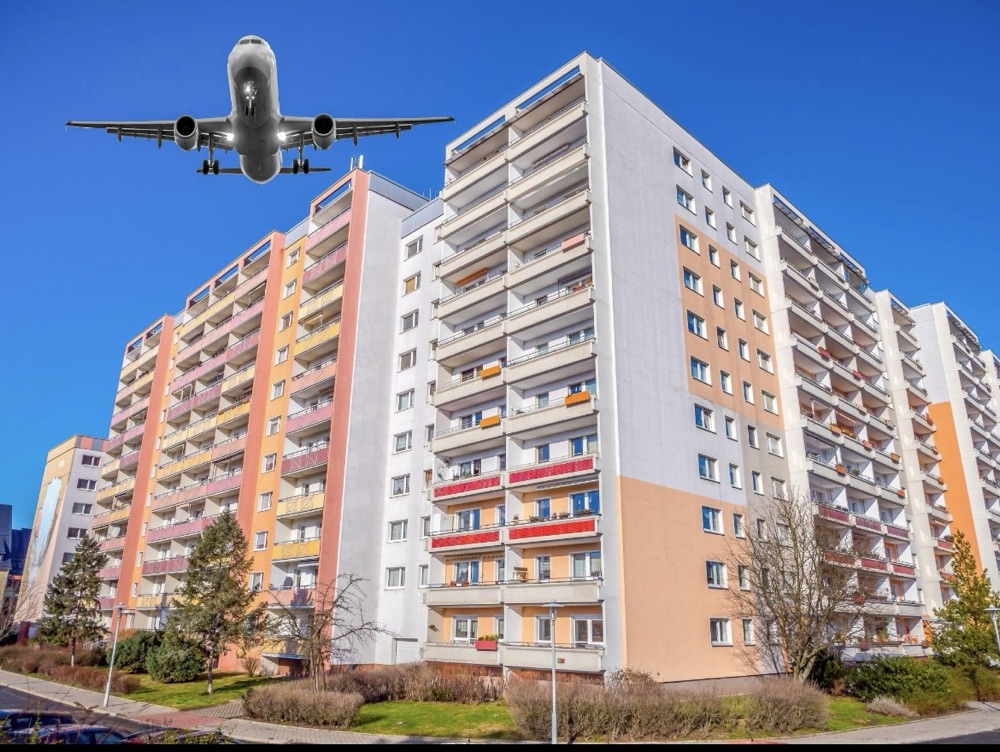
Hyderabad: In a significant update to urban development regulations, the Government of Telangana has issued G.O. Ms No. 124 introducing new provisions for buildings located in airport noise zones. The order, released on April 17, 2026, amends the Telangana Building Rules, 2012 to improve indoor living conditions in areas affected by aircraft noise.
What the New Rule Says
The amendment adds a new clause under Rule 3(d)(iii), specifically addressing construction norms in designated airport noise zones. As per the updated rule:
- All residential, institutional, hospital, and commercial buildings must incorporate sound-resistant materials in design and construction.
- Buildings must comply with noise limits prescribed by DGCA (Director General of Civil Aviation) and MoEF & CC (Ministry of Environment, Forest and Climate Change).
- The responsibility lies with the owner or developer to ensure adherence to these norms.
Why This Amendment Was Introduced
The move comes after inputs from the Hyderabad Metropolitan Development Authority (HMDA), which highlighted the growing concerns over noise pollution in areas surrounding airports, particularly near Rajiv Gandhi International Airport.

With rapid urban expansion around airport zones, authorities felt the need to standardise construction practices to protect residents and occupants from excessive noise exposure.
Focus on Health and Urban Living
Officials stated that the new rule aims to improve the indoor environment quality by ensuring buildings are better equipped to handle high noise levels caused by aircraft movement.
This is particularly important for housing projects, hospitals, and educational institutions, where noise control plays a crucial role in comfort and functionality.
Applicable Across Multiple Building Categories
Unlike earlier provisions, the amendment clearly applies to a wide range of developments, including:
- Residential apartments and villas
- Hospitals and healthcare facilities
- Educational institutions
- Commercial buildings and offices
This ensures a uniform approach to noise management across all types of construction within airport-influenced zones.
Compliance and Enforcement
The order makes it mandatory for builders to strictly follow the noise zone guidelines notified by central agencies. Non-compliance could lead to regulatory issues during approvals and occupancy stages.
Authorities are expected to integrate these norms into the building permission and approval process to ensure enforcement at the planning stage itself.
What It Means for Developers and Buyers
For developers, the new rules may lead to increased construction costs due to the use of specialised materials and design modifications. However, it also enhances the value of projects by ensuring better living standards.
For homebuyers and occupants, the amendment promises reduced indoor noise levels and improved comfort in areas close to flight paths.
A Step Towards Smarter Urban Planning
With this amendment, Telangana joins a growing list of regions focusing on environment-sensitive urban planning. The move is expected to balance infrastructure growth with quality of life considerations.
G.O. 124 marks a key step in aligning building regulations with modern urban challenges, especially in rapidly developing zones around major airports.