
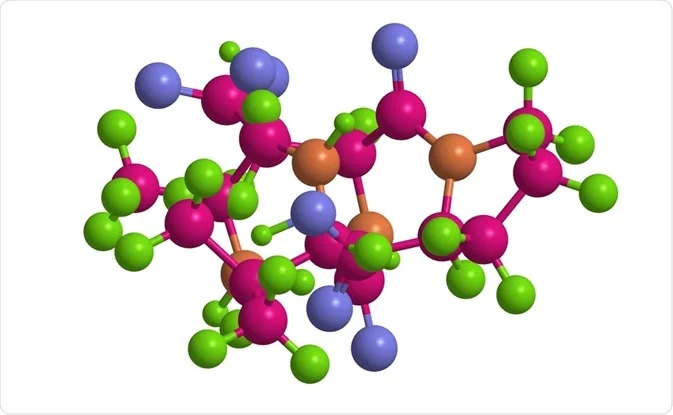
Sermorelin is a synthetic peptide fragment that corresponds to the first 29 amino acids of the endogenous growth hormone-releasing hormone (GHRH). This peptide has attracted considerable attention within endocrinological research due to its potential to stimulate the secretion of growth hormone (GH) from the anterior pituitary gland.
Investigations into Sermorelin suggest that it might serve as a valuable tool to understand growth hormone regulatory mechanisms and their broader implications in cellular physiology. This article examines the biological properties of Sermorelin, its mechanistic underpinnings, and its potential implications across various research domains, with a focus on the peptide’s potential to support scientific understanding of endocrine modulation, independent of experimental exposure.

Overview of Sermorelin and Its Biological Role
Sermorelin is a truncated analog of endogenously occurring GHRH, maintaining the crucial sequence responsible for binding and activating the GHRH receptor. By engaging this receptor on somatotroph cells within the anterior pituitary, Sermorelin is believed to stimulate the release of endogenous GH, thereby supporting downstream pathways involved in growth, metabolism, and cellular regeneration.
The peptide’s relatively small size, coupled with its retention of biological activity, makes it an attractive molecule for research probing the hypothalamic-pituitary axis. Unlike full-length GHRH, Sermorelin’s simplified structure might provide clearer insights into receptor-ligand interactions and signal transduction cascades.
Mechanisms Underlying Sermorelin Activity
Studies suggest that Sermorelin may initiate a signaling cascade upon binding to the GHRH receptor, a G protein-coupled receptor (GPCR), on somatotrophs. This interaction is theorized to stimulate adenylyl cyclase, increasing cyclic AMP (cAMP) levels and activating protein kinase A (PKA). The activation of this pathway likely promotes exocytosis of growth hormone-containing vesicles, thereby supporting GH secretion into the circulatory system.
Research indicates that the peptide might also support gene expression within pituitary cells by modulating transcription factors that regulate growth hormone synthesis, suggesting a role in both acute and longer-term control of GH availability. This dual potential—increasing secretion and possibly upregulating synthesis—positions Sermorelin as a multifaceted modulator of somatotroph function.
Research Implications in Endocrinology and Physiology
Given its alleged support on GH release, Sermorelin is thought to provide a valuable model for investigating the complex regulatory networks that govern endocrine function. Several research avenues emerge where Sermorelin’s properties may illuminate fundamental physiological processes:
- Probing the Hypothalamic-Pituitary Axis
Investigations purport that Sermorelin might serve as a precise tool to dissect the neuroendocrine regulation of growth hormones. By selectively stimulating the GHRH receptor, investigators may distinguish the roles of hypothalamic signals versus peripheral feedback in regulating GH secretion dynamics. This selective receptor activation is especially helpful in unraveling the interactions between inhibitory and stimulatory inputs—such as somatostatin and ghrelin—that modulate somatotroph activity.
- Growth Hormone Rhythms and Pulsatility
Growth hormone secretion is characterized by pulsatile release patterns, which are thought to be critical for maintaining physiological homeostasis. Research suggests Sermorelin might replicate or modify these pulsatile patterns in laboratory settings, providing insights into how pulse frequency and amplitude support downstream support for tissues.
By exploring how Sermorelin exposure alters GH secretory dynamics within research models, investigators might better comprehend the physiological importance of hormone rhythms and their role in metabolism, tissue repair, and cellular growth.
- Investigating Metabolic and Anabolic Processes
Growth hormone has a profound support on lipid metabolism, protein synthesis, and glucose homeostasis. Sermorelin’s potential to stimulate endogenous GH release may make it a relevant molecule for indirectly studying these metabolic pathways.
Researchers might explore how Sermorelin-modulated GH secretion supports the balance between lipolysis and lipogenesis or how it might support anabolic signaling cascades, such as insulin-like growth factor 1 (IGF-1) production and its receptor activation in peripheral tissues. Understanding these interactions may clarify the complex endocrine controls over energy partitioning and tissue remodeling.
- Potential for Neuroendocrine and Cognitive Research
Emerging research suggests that growth hormone pathways may have broader neurological implications, supporting neuroplasticity, cognition, and neuroprotection. Sermorelin’s role in stimulating GH may thus extend research opportunities into the neuroendocrine interface.
Investigations suggest that Sermorelin may modulate neurotrophic factors and neural repair mechanisms through the GH and IGF-1 pathways. This line of research is compelling for examining how neuroendocrine peptides support learning, memory, and recovery from neural injury within research models.
- Molecular and Cellular Signaling Insights
Findings imply that Sermorelin may also serve as a probe for studying GPCR biology and intracellular signaling cascades. Given its receptor specificity, researchers might employ Sermorelin to elucidate the conformational changes, second messenger kinetics, and downstream effectors involved in GHRH receptor activation.
Detailed molecular investigations using techniques such as receptor mutagenesis, fluorescence resonance energy transfer (FRET), and live-cell imaging might uncover novel aspects of peptide-receptor dynamics, receptor desensitization, and internalization. Such insights may have implications that extend beyond endocrinology, informing broader research on GPCR-targeted approaches.
- Structural Biology and Peptide Engineering
Sermorelin, due to its relatively small size and functional activity, might be exploited in structural biology studies. Crystallographic or cryo-electron microscopy approaches might potentially elucidate peptide-receptor complexes at atomic resolution.
Moreover, Sermorelin is believed to offer a foundation for peptide engineering aimed at modifying stability, receptor affinity, and signaling bias. Such engineered peptides might help dissect which structural features are critical for receptor activation versus internalization or which modifications alter downstream signaling selectivity.
Broader Implications and Future Directions
The peptide’s potential support on endogenous growth hormone release highlights a broader theme in endocrinology: the potential of targeted neuropeptides to modulate complex physiological systems through specific receptor interactions. Sermorelin may represent a gateway molecule to comprehend better not only growth hormone regulation but also the integrative networks that maintain cellular homeostasis.
It has been theorized that combining Sermorelin with other regulatory peptides might yield synergistic insights into hormonal cross-regulation. For example, co-modulation with somatostatin analogs or ghrelin mimetics in research models might help elucidate antagonistic and cooperative hormonal interplay.
Conclusion
Sermorelin represents a powerful investigative peptide that may facilitate a deepened understanding of growth hormone regulation and its broader physiological supports. Its selective receptor engagement and downstream signaling support for position it as an important molecule within endocrine research, with promising implications in metabolic, neuroendocrine, and molecular biology domains.
Continued exploration of Sermorelin in diverse research models is likely to illuminate intricate neuroendocrine feedback loops, hormone pulsatility dynamics, and peptide-receptor biology. Such insights might lead to novel frameworks for understanding cellular growth, metabolism, and neuroplasticity, thereby advancing the frontiers of endocrine science. Researchers are encouraged to visit Core Peptides.
References
[i] Prakash, A., & Goa, K. L. (1999). Sermorelin: a review of its use in the diagnosis and treatment of children with idiopathic growth hormone deficiency. BioDrugs, 12(2), 139–157.
[ii] Khorram, O., Laughlin, G. A., & Yen, S. S. (1997). Endocrine and metabolic effects of long-term administration of [Nle^27]growth hormone‑releasing hormone-(1–29)-NH₂ in age‑advanced men and women. Journal of Clinical Endocrinology & Metabolism, 82(5), 1472–1479.
[iii] Veldhuis, J. D., Keenan, D. M., & Pincus, S. M. (2008). Motivations and methods for analyzing pulsatile hormone secretion. Endocrine Reviews, 29(7), 823–864.
[iv] Walker, R. F., Codd, E. E., Barone, F. C., Nelson, A. H., Goodwin, T., & Campbell, S. A. (1985). Growth induced by pulsatile infusion of an amidated fragment of human growth hormone‑releasing factor in normal and GHRF‑deficient rats. Nature, 314(6008), 281–283.
[v] Frohman, L. A. (1984). Rapid enzymatic degradation of growth hormone‑releasing hormone by plasma in vitro and in vivo to a biologically inactive product cleaved at the NH₂ terminus. Journal of Clinical Investigation, 73(5), 1403–1413.
