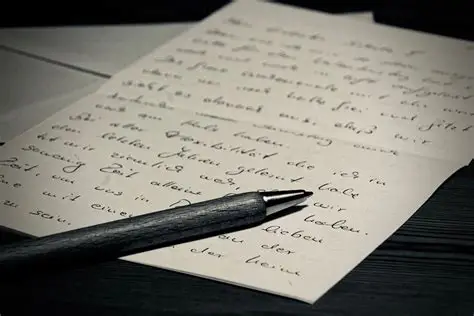
Long before blue ticks, typing indicators, and instant replies, people waited for letters. Days would pass between sending a message and receiving a response. Yet somehow, those conversations often felt more meaningful than the countless texts we exchange today.
A handwritten letter was never just a piece of paper. It carried the presence of the person who wrote it. The handwriting, the choice of words, the occasional crossed-out sentence, and even the folds in the paper told a story. Every letter felt personal because it required something increasingly rare in today’s world that is time.
Today, communication has never been easier. A message can travel across the world in seconds. We can send photographs, voice notes, and video calls with a tap of a screen. Yet, despite these conveniences, many people still hold on to old letters, preserving them in drawers, books, and boxes for years. Few people revisit old text messages with the same affection.

The difference lies in the effort.
Writing a letter demanded attention. People carefully chose their words because there was no delete button. They wrote knowing that every sentence mattered. Unlike today’s rapid exchanges, letters encouraged reflection. They transformed communication into an act of thoughtfulness rather than immediacy.
Letters taught people the value of patience. Relationships were not built through constant updates but through trust, anticipation, and effort. A reply could take days or even weeks to arrive, yet the bond remained strong. The process of writing, waiting, and responding reminded people that meaningful relationships require time and care. In many ways, letters taught an important lesson that remains relevant even today: the things we value most are rarely instantaneous.
For generations, letters served as emotional bridges across distances. Students studying away from home waited eagerly for letters from their parents. Friends exchanged updates about their lives. Lovers poured their hearts onto paper when circumstances kept them apart. Soldiers wrote home from distant borders. In many households, letters were treasured possessions, read repeatedly until the paper itself began to wear out.
Letters also carried with them the efforts of countless unseen individuals. Before reaching their destination, they passed through the hands of postal workers who sorted, transported, and delivered them across cities, towns, and villages. For many families, the arrival of the postman was itself an event. The sound of a bicycle bell at the gate often brought excitement, hope, and news from loved ones living far away. In an era before instant communication, postmen were more than messengers—they were silent bridges connecting people across distances.
What made these letters special was not merely the information they contained, but the emotions they carried. A text message tells us what someone wants to say. A handwritten letter often tells us who they are.
The rise of digital communication has undoubtedly made life more convenient. Yet it has also changed the nature of our interactions. Messages today are often brief, hurried, and easily forgotten. Conversations disappear beneath endless notifications and overflowing chat histories. Communication has become faster, but not always deeper.
This is why handwritten letters continue to evoke nostalgia. They remind us of a slower world, one where people paused to express themselves fully and where waiting was part of the experience.
Interestingly, letters are not entirely disappearing. Around the world, there has been a quiet revival of slow communication. Some people maintain pen-pal friendships. Others exchange postcards while travelling. Many still choose handwritten notes for birthdays, anniversaries, and special occasions. In a digital age, the very rarity of handwritten letters has made them more meaningful.
A handwritten letter also becomes a physical memory. Unlike a text message buried in a phone, it can be held, preserved, and revisited years later. It becomes a small piece of history, carrying the emotions of a particular moment in time.
That is why old letters remain difficult to throw away. They are more than words. They are reminders of relationships, milestones, and people who shaped our lives.
Technology will continue to evolve, and instant communication will remain an essential part of modern life. But the enduring appeal of handwritten letters reminds us that meaningful communication is not measured by speed. It is measured by sincerity. In a world of disappearing messages and fleeting conversations, a handwritten letter remains something rare—a message that asks not only to be read, but to be kept.