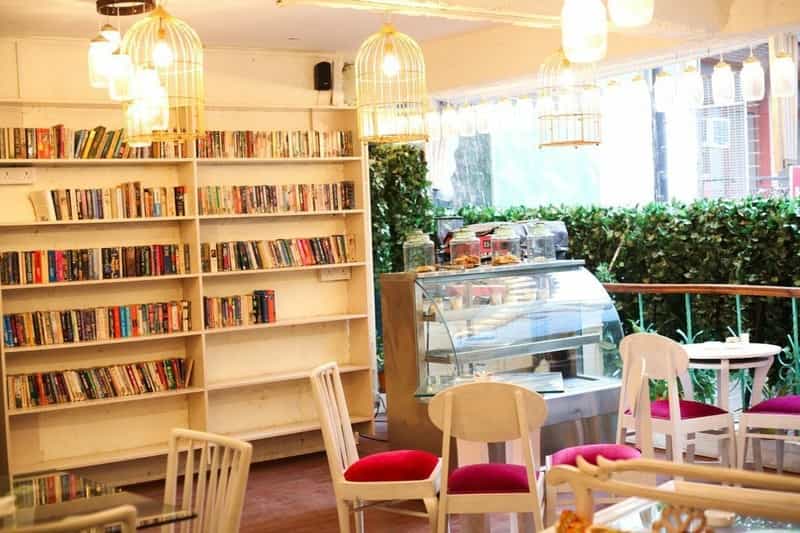
On a weekday afternoon, the usual soundtrack of a cafe—clinking cups, hushed conversations, and the occasional burst of laughter, is accompanied by something less common: the turning of pages. At a corner table, a college student is annotating a novel. Nearby, two strangers discuss a recent book club pick. A group gathers in the back for a poetry reading. In a world dominated by screens and notifications, book cafes are quietly making a comeback, offering something many people did not realise they were missing—a space to slow down.
Across cities, book cafes are emerging as more than places to grab a coffee and browse a bookshelf. They are becoming community spaces, cultural hubs, and refuges from the noise of everyday life. Their growing popularity reveals something significant about how people, particularly young adults, are choosing to spend their time in an increasingly digital world.
According to American sociologist Ray Oldenburg, a “third space” is a place that exists outside the home and the workplace—a setting where people can gather, connect, and build community beyond their personal and professional lives. Traditionally, community centres, libraries, parks, and coffee houses served this role, providing spaces where people could gather, connect, and simply exist without expectations.
Today, many of these spaces have become increasingly scarce. Urban life is often defined by packed schedules, rising living costs, and a culture of constant productivity. Even leisure time can feel structured and goal oriented.
Book cafes offer a different experience. Visitors are not expected to buy multiple items, stay productive, or engage in endless social interaction. They can read, write, work quietly, or simply spend time in a comfortable environment. In many ways, book cafes provide the kind of unstructured community space that many people feel has disappeared.
The rise of book cafes coincides with growing conversations around digital fatigue.
From the moment many people wake up, they are surrounded by screens. Notifications, emails, social media updates, and short-form videos compete constantly for attention. While technology has made communication easier, it has also made uninterrupted focus increasingly rare.
Book cafes offer a subtle form of resistance to this culture of constant connectivity. There is something almost radical about sitting with a physical book for an hour without checking a phone. Reading requires patience and concentration, qualities that many people feel are being eroded by endless scrolling.
The popularity of reading-focused spaces suggests that people are not simply looking for entertainment. They are looking for moments of presence.
While books remain central to their appeal, today’s book cafes offer much more than shelves and seating. Many host poetry readings, open mics, writing workshops, book clubs, film screenings, and cultural discussions. These events transform book cafes into spaces where people can exchange ideas and build meaningful connections around shared interests.
For independent artists, writers, and performers, such venues provide opportunities that are increasingly difficult to find elsewhere. For visitors, they offer a chance to participate in communities built around creativity rather than algorithms. In an era where many interactions take place online, these gatherings satisfy a growing desire for real-world connection.
Ironically, social media has played a role in the resurgence of reading culture.
Platforms such as Facebook and Instagram have helped create online communities centred around books. Through recommendations, reviews, and reading challenges, readers have found new ways to engage with literature and share their enthusiasm.
The popularity of online book communities has translated into greater interest in physical reading spaces. Many readers who discover books online are now seeking places where they can discuss them offline. The result is an interesting blend of digital and analogue culture. Social media may introduce people to books, but book cafes provide a space to experience them more deeply.
The appeal of book cafes reflects a broader truth about human connection.
Despite living in one of the most connected periods in history, many people report feeling isolated. Online interactions, while valuable, do not always replace the sense of belonging that comes from sharing physical spaces with others.
Book cafes offer a unique balance. They allow people to be alone without feeling lonely. A visitor can sit quietly with a book while still being surrounded by a community of readers, writers, and thinkers. For regular visitors, the appeal of book cafes often lies in the atmosphere they create. Ananya, a second-year university student and avid reader, says book cafes offer a welcome escape from the pace of everyday life.
“I feel it is much quieter. It gives a cosy, home-like vibe. I don’t feel rushed there. It’s a complete detachment from the outside world—a peaceful place that gives me space to think,” she said.
Another frequent visitor, Anchal, a student, believes book cafes offer an experience that traditional cafes often cannot.
“Of course, book cafes are much more preferred than regular cafes. Most of us cannot always manage to visit a library or sit in our rooms to read because of time constraints. So, if you can enjoy the comfort of reading while sipping your coffee, then why not? The cherry on top is that many book cafes also sell books, giving visitors the experience of a bookstore. They also organise book clubs, which are great for bibliophiles who want to connect with other readers,” she said.
This subtle sense of connection may be one of the reasons these spaces continue to resonate.
The growing popularity of book cafes can also be understood as part of a wider cultural shift toward slower, more intentional living.
From journaling and gardening to analogue photography and craft hobbies, many people are embracing activities that encourage focus and mindfulness. Reading fits naturally within this movement. Unlike much of digital media, it asks for time, attention, and patience.
Book cafes provide an environment where these values can flourish. They encourage visitors to linger rather than rush, to engage rather than scroll, and to experience rather than consume.
It would be easy to dismiss the resurgence of book cafes as a lifestyle trend driven by aesthetics and social media. Yet their growing popularity suggests something deeper.
These spaces represent a response to the pressures of contemporary life. They offer a break from digital overload, a sense of community in increasingly fragmented cities, and an opportunity to engage with ideas at a slower pace.
In a culture that often rewards speed, efficiency, and constant connection, the book cafe offers an alternative. It reminds us that sometimes the most meaningful experiences are also the simplest: a good book, a cup of coffee, and a place where there is no pressure to be anything other than present.
Perhaps that is why book cafes are thriving once again. They are not just selling coffee or books. They are offering something many people have been quietly searching for all along—a place to belong.