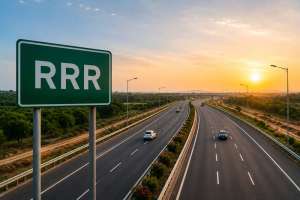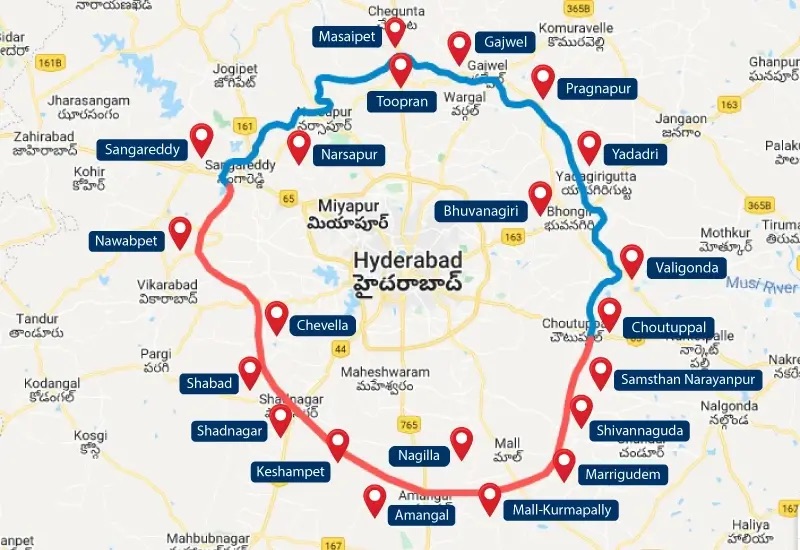
Hyderabad: The ambitious Regional Ring Road (RRR), also known as Triple R, around Hyderabad has undergone major changes, with the Central Government reportedly removing its expressway status and scaling down several key features to reduce costs. The project, once envisioned as a high-speed, world-class expressway surpassing the Outer Ring Road (ORR), is now expected to be developed as a standard National Highway (NH).
Cost Concerns Behind the Decision
Officials estimate that the total cost of the RRR project, including both northern and southern stretches, could exceed ₹38,000 crore. To manage this massive expenditure, authorities have been reviewing the design over the past few months and implementing multiple cost-cutting measures. These changes are expected to reduce the project cost by nearly 25%.
Major Changes in RRR Design
- Expressway tag removed, converting it into a regular National Highway
- Lanes reduced from 8 to 6
- Speed limit reduced from 120 km/h to 100 km/h
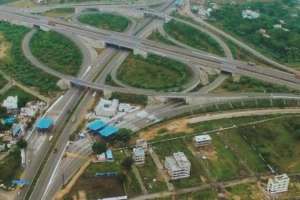
- Number of bridges and interchanges reduced by nearly 50%
- No service roads in the revised design
- Street lighting limited to urban or populated areas only
- Overall construction standards lowered to reduce costs
Impact on Infrastructure and Connectivity
Earlier, the RRR was planned as India’s longest expressway ring road spanning approximately 362 km, designed to significantly boost connectivity around Hyderabad and decongest traffic from the ORR. The original plan included 8 lanes, high-speed travel, advanced interchanges, and full access control.

However, with the revised design, experts believe the project may no longer match the performance of the existing Outer Ring Road, which supports speeds up to 120 km/h. The new speed cap of 100 km/h and reduced infrastructure standards could impact travel efficiency and future traffic capacity.
Reduction in Bridges and Road Infrastructure
One of the major cost-cutting steps is the reduction in the number of bridges. In the northern stretch alone, the earlier proposal included over 200 bridges and structures, which has now been cut by nearly half. This could affect local connectivity, as fewer underpasses and crossings may require vehicles to travel longer distances for access points.
Similarly, the initial plan for service roads has been completely dropped. Even the intermediate proposal of access roads has been removed, meaning the highway will have limited entry and exit points without parallel connectivity roads.
Changes in Road Design and Safety Features
The original expressway design allowed for higher embankments and gradual slopes to support high-speed travel with better visibility. Vehicles were expected to safely travel at speeds exceeding 120 km/h, with visibility distances of up to 600 meters.
Under the revised plan, the vertical slope length has been reduced, lowering visibility to around 360 meters. Experts warn that this could impact road safety, especially if vehicles exceed the prescribed speed limits.
Street Lighting and Urban Features Scaled Down
Initially, the RRR was proposed with continuous LED street lighting similar to the ORR. However, due to high costs, the new plan limits lighting only to urban and populated stretches, leaving long highway sections without illumination.
What Remains Unchanged
Despite the major revisions, the total length of the RRR remains unchanged at around 362 km. The project is still expected to play a key role in connecting multiple national and state highways around Hyderabad and supporting long-term regional development.
Concerns and Industry Reaction
Infrastructure experts and stakeholders have expressed concerns that the downgrade could reduce the project’s long-term impact. The original vision of a next-generation expressway was expected to transform logistics, real estate, and industrial growth in Telangana.
With the revised design, there are concerns that the RRR may function more as a basic bypass highway rather than a high-speed economic corridor. However, officials maintain that the changes are necessary to ensure financial viability and faster execution of the project.
Future Outlook
While the revised RRR may not match the scale of its original vision, it is still expected to improve regional connectivity and reduce traffic pressure on Hyderabad’s existing road network. Further clarity on timelines and execution phases is expected in the coming months as the project moves forward.