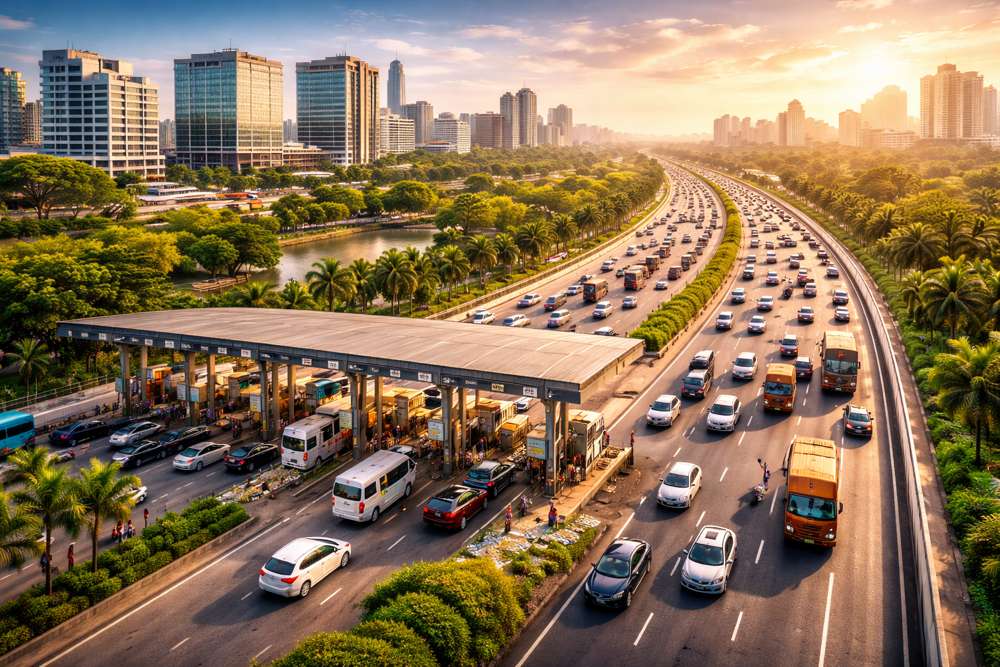
Hyderabad’s Nehru Outer Ring Road (ORR), one of India’s largest urban expressway networks, is witnessing a sharp rise in traffic movement and toll revenue, reflecting the city’s rapid expansion and growing vehicle population. The 158-kilometre access-controlled expressway around Hyderabad has now become a crucial transport corridor linking major IT hubs, residential clusters, and industrial zones.
According to recent operational data, the ORR is currently handling nearly 1.6 lakh vehicles every day, marking a steady increase in traffic over the past year. The growth in traffic has also translated into higher toll collections. In February 2026, toll revenue reached approximately ₹73.7 crore, compared to around ₹65.2 crore during the same month in February 2025.
Key Expressway for Hyderabad’s Expansion
The Jawaharlal Nehru Outer Ring Road has become the backbone of Hyderabad’s road infrastructure. The expressway connects important growth corridors such as Gachibowli, Financial District, Shamshabad Airport, Patancheru, Medchal, Shamirpet, and Pedda Amberpet, significantly reducing travel time across the metropolitan region.

The ORR also integrates with the Rajiv Gandhi International Airport and several national highways, enabling seamless connectivity for passenger vehicles, logistics companies, and long-distance freight movement.
Operated Under the TOT Model
The operations and maintenance of the ORR were leased under the Toll-Operate-Transfer (TOT) model for a concession period of 30 years. Infrastructure developer IRB Infrastructure Developers Ltd secured the concession by paying an upfront amount of around ₹7,380 crore to the government.
Under the agreement, the concessionaire is responsible for toll collection, maintenance, and operational management of the expressway while the ownership of the road remains with the government.
Toll Revenues Expected to Cross ₹840 Crore Annually
With traffic steadily rising, the ORR has become one of the most profitable road assets in the country. Current estimates suggest that annual toll collections could reach approximately ₹840 crore.
As per concession rules, toll rates on the ORR can increase by up to 5 percent every year, allowing the operator to adjust charges in line with inflation and maintenance costs.
Growth Driven by Hyderabad’s Real Estate Boom
The surge in traffic on the ORR is closely linked to Hyderabad’s rapid real estate development. Several residential townships, IT campuses, and industrial parks have emerged along the ORR corridor over the past decade.
Areas such as Kokapet, Narsingi, Tellapur, Kollur, Adibatla, and Shamirpet have seen major real estate investments due to their proximity to the ORR, making the expressway a critical driver of urban growth.
Future Infrastructure Around ORR
The ORR corridor is also expected to play a key role in upcoming infrastructure projects including the proposed Regional Ring Road (RRR), logistics parks, and new industrial clusters planned around Hyderabad.
Transport planners believe that with the city’s vehicle population continuing to rise and suburban development expanding, traffic volumes on the ORR are likely to grow further in the coming years, strengthening its position as one of the most important urban expressways in India.