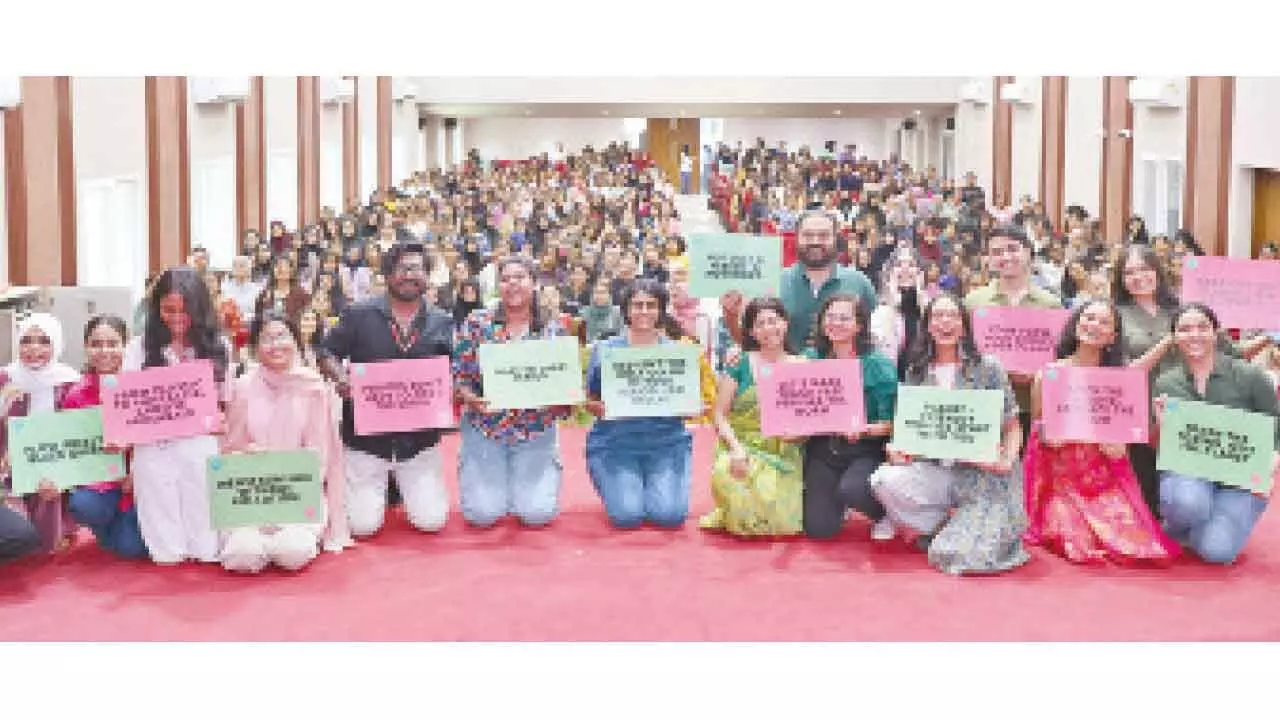
In Hyderabad, an event at St. Ann’s College for Women tackled the often-ignored topic of menstrual waste and its effects on health and the environment. Named ‘Period. Planet. Power,’ the event aimed to break stereotypes and highlight the urgent need for eco-friendly menstrual products. Traditional pads contain plastic, comparable to four plastic bags per pad, and take hundreds of years to decompose. India produces over 100,000 tonnes of menstrual waste every year, emphasizing the need for sustainable and safe alternatives.
The event is part of the “No Plastic on Private” campaign, led by Dr. Manjula Anagani, a well-known gynecologist and Padma Shri awardee. This initiative, supported by Dr. Nabat Lakhani of NGO Marham, focuses on women’s health and menstrual awareness. The 95 Mirchi Hyderabad Team and Rotaract also backed the campaign.
Plastic pads pose risks not only to the environment but also to health. They contain synthetic materials and chemicals that can cause rashes and irritation. Improper disposal contributes to pollution of soil, water, and air.

Dr. Manjula explained, “The ‘No POP’ movement arose from my concern about women’s health issues linked to plastics in sanitary products. Conditions like PCOS and endometriosis are increasing, often due to chemicals in these products. We must prioritize health over convenience by using products free from harmful chemicals.”
Dr. Nabat Lakhani added, “As a healthcare professional, I witness the silent suffering related to menstruation. Through ‘No Plastic on Private,’ we promote healthier and sustainable choices. Our youth are ideal leaders for this change.”
The event engaged students with fun discussions and facts, encouraging them to rethink their period products. It introduced alternatives like cloth pads, menstrual cups, period panties, and biodegradable pads. Students actively participated, dispelled myths, and committed to being eco-conscious menstruators. This event empowered young women to manage their health and protect the planet, one pad at a time.