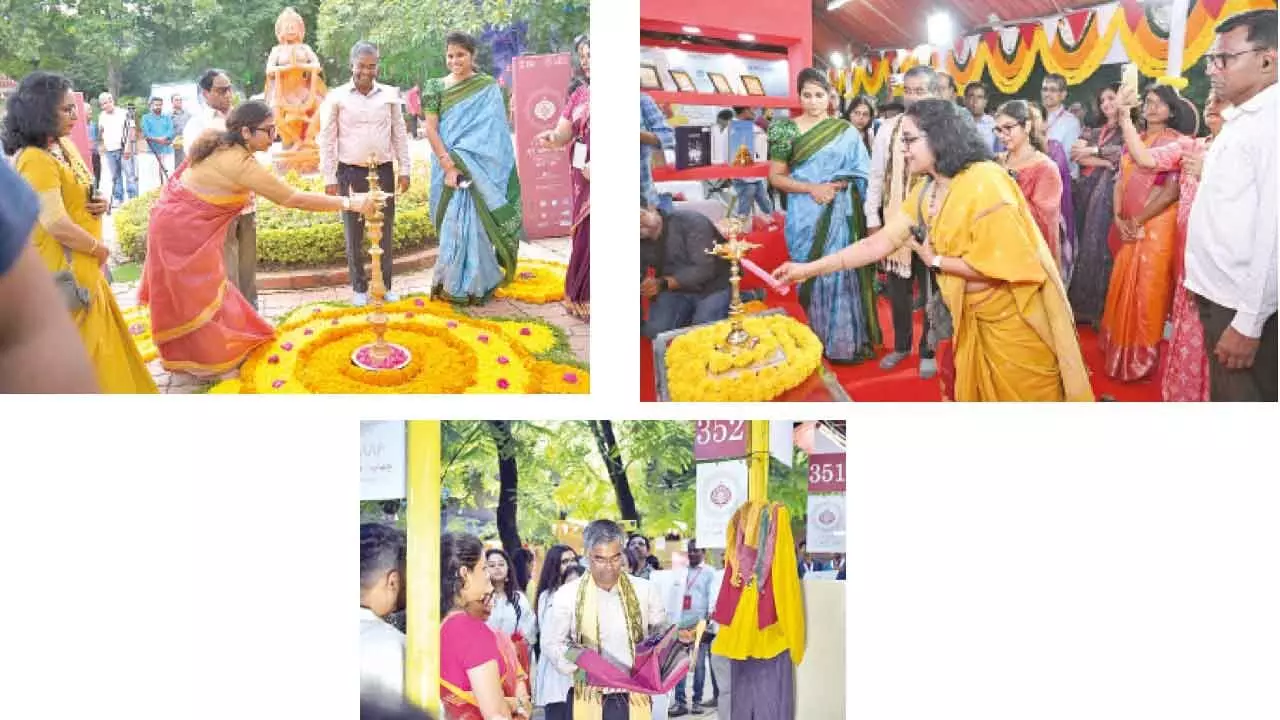
Hyderabad: At the CHHAAP-2025 event, India’s vibrant handlooms and crafts were celebrated through “Sampadā,” a fashion show highlighting the country’s rich textile heritage with a modern twist.
The show was organized by the Ministry of Textiles, the National Institute of Fashion Technology (NIFT), and top Indian designers. It attracted worldwide interest by showcasing the enduring beauty and depth of India’s handcrafted traditions.
“Sampadā” means both wealth and heritage. This name honors generations of artisans whose intricate designs have helped shape India’s cultural identity. The show featured garments in three styles: Traditional Indian, Fusion, and Western wear. Each piece combined ancient techniques with modern fashion, proving the ongoing importance of indigenous textiles.

India’s handmade fabrics reflect the country’s diverse communities and their values. From the bright Banarasi silk to the natural feel of Khadi, each item in Sampadā told a story of resilience and cultural pride.
NIFT’s Craft Cluster Initiative was crucial in developing the showcase. This program links fashion students with local artisans, encouraging shared learning and innovation. By transforming student creativity into market-ready designs, the initiative empowers rural artisans and ensures traditional practices thrive in the fast-changing fashion world.
Event organizers stressed the need to preserve India’s textile wealth while adapting it to global fashion trends.
“Sampadā is a celebration of knowledge and tradition passed down through generations,” said a senior Ministry of Textiles official. The show impressed international audiences and underscored India’s dedication to cultural preservation and sustainable fashion.
As global markets increasingly value authenticity and craftsmanship, Sampadā positioned India as a leader in heritage-driven innovation.
Through its captivating display and collaborative approach, Sampadā confirmed that India’s textile legacy is a dynamic force influencing the future of fashion, not just a relic of the past.