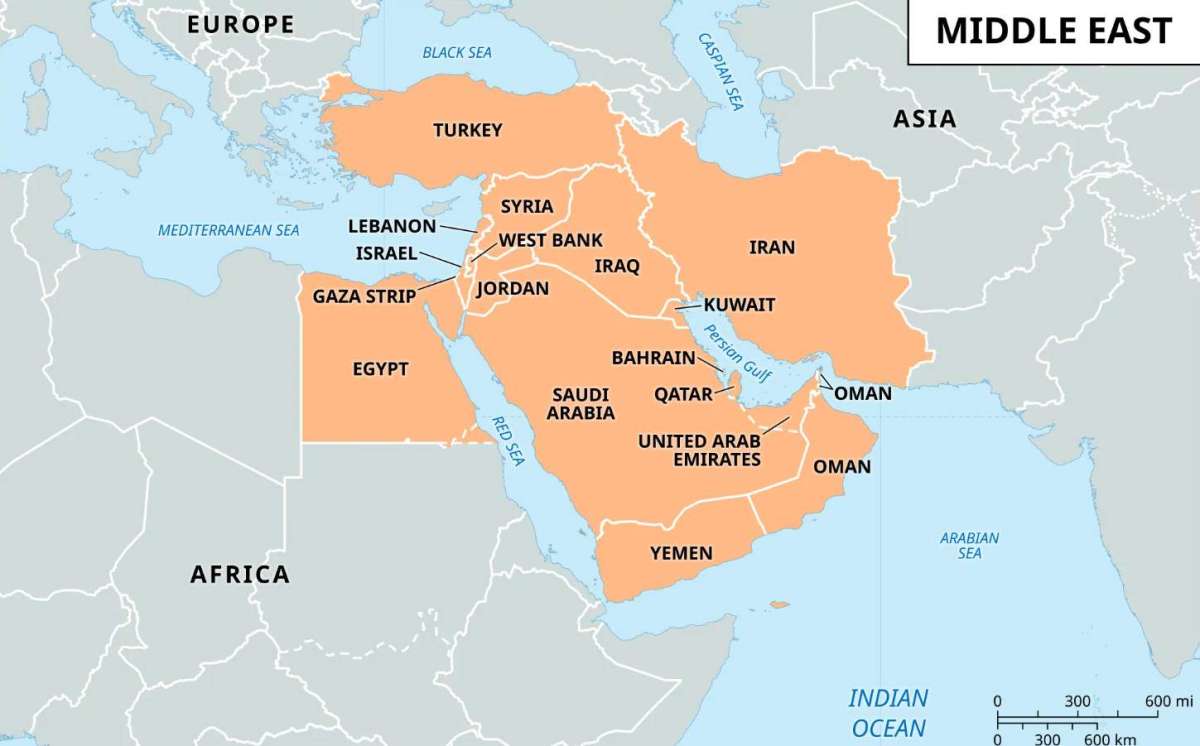
The Middle East has once again become a hotspot for a humanitarian crisis. Israel’s actions in Gaza have resulted in widespread destruction and civilian loss of life. Similarly, continued strikes on Lebanon, Yemen, and Iran by Israel, and Iranian strikes in return, have escalated unrest in the region. This ongoing conflict has resulted in significant tensions, which, besides the high humanitarian cost, has broad implications for the global economy.
A major consequence of the conflict is its impact on oil prices. Iran is a major oil supplier, especially for countries in Asia and Europe. Attacks on Iran’s oil facilities could increase global oil prices, which in turn would raise production costs across all sectors. This would affect the cost of goods, especially food and chemicals. Additionally, Iran’s influence over the Strait of Hormuz, through which more than 20% of global oil trade passes, amplifies this risk. The rise in oil prices leads to inflation because, as fuel becomes more expensive, transportation and production costs increase. This drives up the prices of goods and services across the economy, resulting in higher inflation.
A further economic impact which can occur is higher shipping costs and supply chain disruptions. Conflicts involving the Houthis in Yemen, disruptions occurred in the Red Sea in 2023, affecting maritime routes. With maritime routes taking longer routes to avoid conflict areas, imported goods will see an increase in price.
The economy has much to do with expectations. The prospect of a war has discouraged foreign investors in the Middle East. The increase in geopolitical risks reduces global trade and financial flows. Tourism has also taken a direct hit due to the situation in the Middle East. Another aspect is global sanctions against the countries involved. Norway’s wealth fund is divesting from Israeli companies, citing concerns over how Israel conducts its war in Gaza. Israel also faces partial or complete arms bans from Spain, Italy, the Netherlands, France, the United Kingdom, and others over its actions in Gaza. Additionally, the global Boycott, Divestment and Sanctions (BDS) movement has influenced various multinational corporations.
The aviation sector has also faced disruption as a result of these tensions. Israeli and Iranian airspace remains closed during the tensions between Tehran and Tel Aviv. This led to several airlines canceling their flights or rerouting them including Qatar Airways, Emirates, and Air India, which often rely on this air corridor to travel.
It is important to consider the wider consequences of escalating conflict in the region. The impact extends beyond the Middle East, influencing the global economy. The direct economic impact on countries most affected is significant, with Lebanon experiencing rising unemployment and inflation. The near-destruction of Gaza has devastated the region, while the economy of the Occupied West Bank has been severely weakened. Both Iran and Israel are under economic strain due to the war. It has also resulted in widespread displacement of people into neighboring countries. Due to the dependence on oil and imported goods from the Middle East, India is also likely to face consequences.