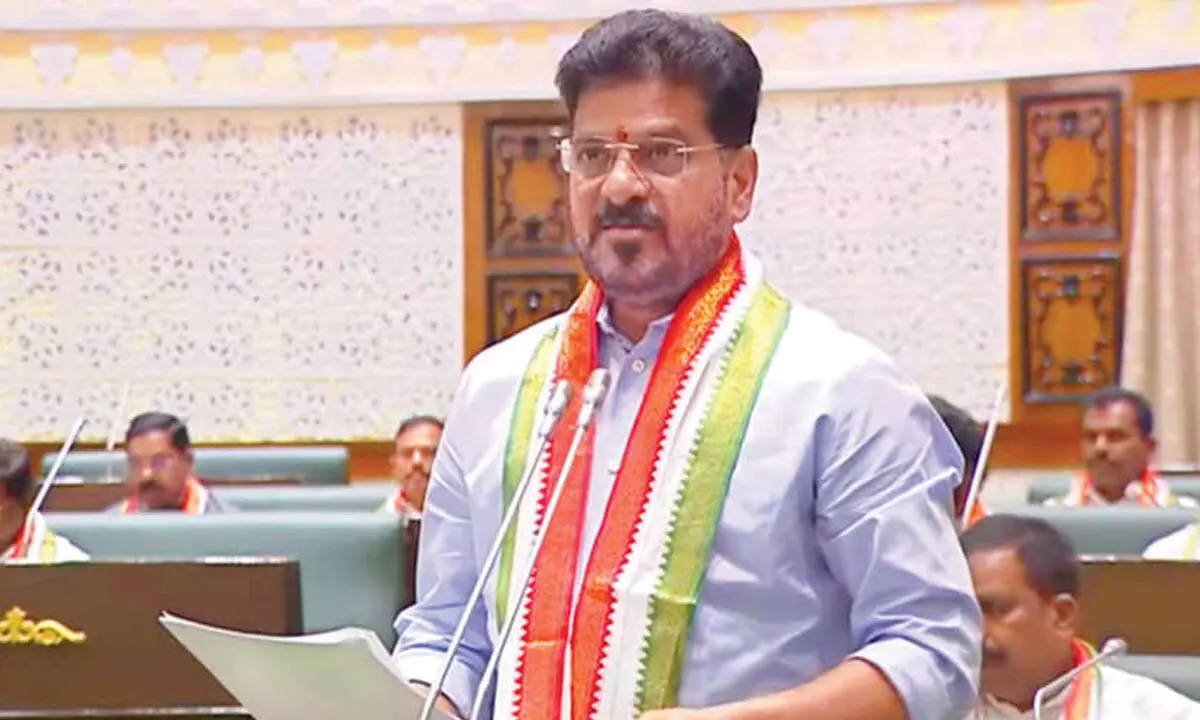
Hyderabad: Before Diwali, the State Legislative Assembly will likely see intense discussions. Chief Minister A Revanth Reddy plans to present the Justice PC Ghose Commission report on Sunday. This report investigates alleged corruption and irregularities in the Kaleshwaram project.
The Telangana High Court has stopped the state government from releasing the report publicly until it’s debated in the Assembly. The opposition, Bharat Rashtra Samithi (BRS), has been challenging the report for over two weeks. The Chief Minister will introduce the 650-page document for discussion among the political parties in the House.
According to an official statement, the Ghose Commission report blames former Chief Minister K Chandrashekar Rao (KCR) and T Harish Rao, a former irrigation officer, for issues in the planning, execution, and maintenance of the Kaleshwaram Lift Irrigation Project.
On August 22, the High Court refused to give interim relief to KCR and T Harish Rao in their attempts to dismiss the report. They argued that the investigation led by Ghose was illegal under the Commission of Inquiry Act.
The Business Advisory Committee (BAC), which met after the Assembly session on Saturday, has not yet scheduled the Assembly’s sessions. However, leaders indicate the government plans a two-day session to discuss the Ghose Commission report and amend the Panchayat Raj Act to provide quotas for BCs in upcoming local elections.
Due to police preparations for Ganesh festivities and idol immersion, the state government may pause the Assembly session, resuming it post-immersion. Assembly Speaker G Prasad Kumar will decide on extending the session on Sunday.
Meanwhile, the BRS walked out of the BAC meeting. They were upset that issues like urea shortage, floods, viral fevers, and deaths in Gurukul schools were not prioritized in the session’s agenda.
BRS leader T Harish Rao stated that the opposition demanded a 15-day Assembly session in the BAC meeting. The government rejected this. The BRS also urged discussions on the recent flood damage to lives and crops. Another critical issue is the severe urea shortage. “We demanded a thorough discussion in the Assembly on who is accountable for this urea shortage. We also requested a debate on the rise of viral fevers such as malaria and dengue due to poor village sanitation,” the BRS said.