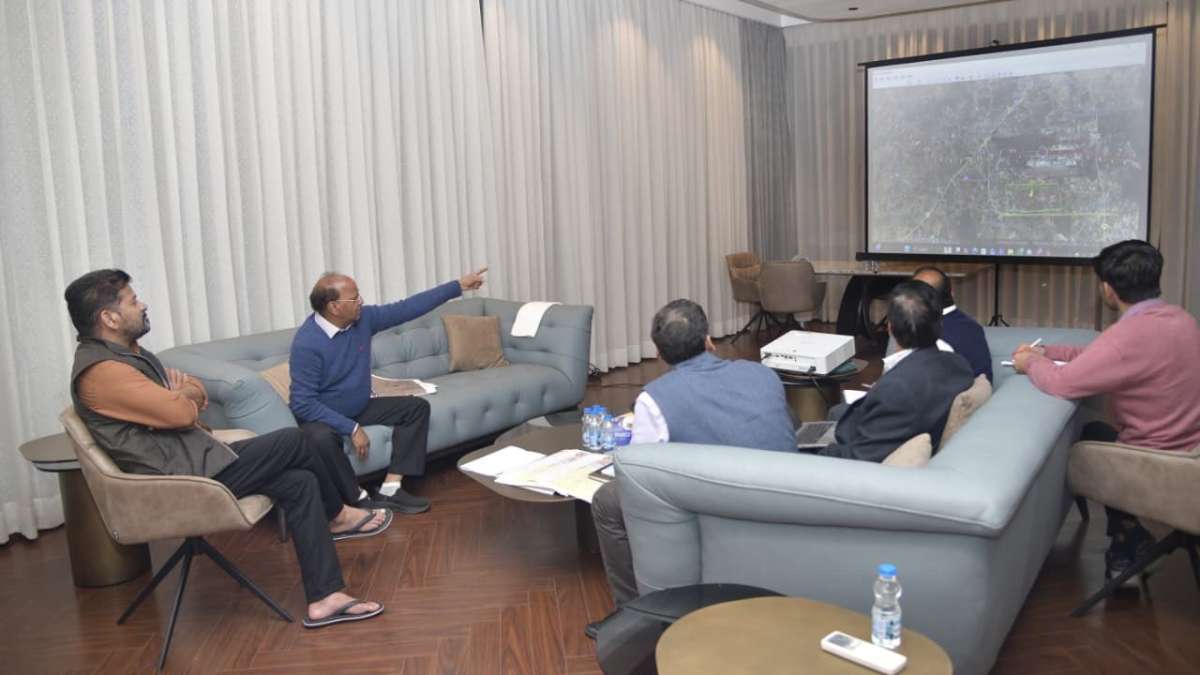
Chief Minister Revanth Reddy conducted a comprehensive review of the proposed Hyderabad-Bengaluru and Hyderabad-Chennai high-speed rail corridor projects during a high-level meeting held in Delhi. The review session took place at the Chief Minister’s official residence, where detailed presentations were made by officials from RITES, the organization responsible for preparing the Detailed Project Reports (DPRs) for these ambitious connectivity projects.
RITES has been entrusted with the task of developing comprehensive DPRs for both high-speed rail corridors following the announcement made in the Union Budget. The organization’s representatives provided an extensive presentation covering various technical and operational aspects of the proposed rail corridors. The presentation included detailed information about route alignments, station locations, technical specifications, and implementation timelines for both the Bengaluru and Chennai routes.
During the meeting, Chief Minister Revanth Reddy carefully examined the proposed alignments for both corridors. He engaged in detailed discussions with the RITES officials regarding the technical feasibility, connectivity benefits, and potential challenges associated with the projects. The Chief Minister offered several key suggestions aimed at fine-tuning the project parameters to ensure optimal benefits for the state and its residents.
The review meeting witnessed the participation of senior government officials who play crucial roles in infrastructure development. Principal Secretary K.S. Srinivasa Raju attended the session alongside Secretary (Coordination) Dr. Gaurav Uppal. From RITES, Executive Director Lalit Kumar was present to provide technical inputs and address queries raised during the discussions.
The high-speed rail corridors are expected to significantly reduce travel time between Hyderabad and the two major southern metros. The Hyderabad-Bengaluru corridor will enhance connectivity with Karnataka’s capital, while the Hyderabad-Chennai corridor will strengthen links with Tamil Nadu. These projects are part of the central government’s broader vision to improve inter-city connectivity through modern rail infrastructure across the country.
The DPR preparation process by RITES involves conducting feasibility studies, traffic surveys, environmental impact assessments, and financial viability analyses. Once the DPRs are finalized and approved, the projects will move forward to the implementation stage, marking a significant milestone in Telangana’s transportation infrastructure development.