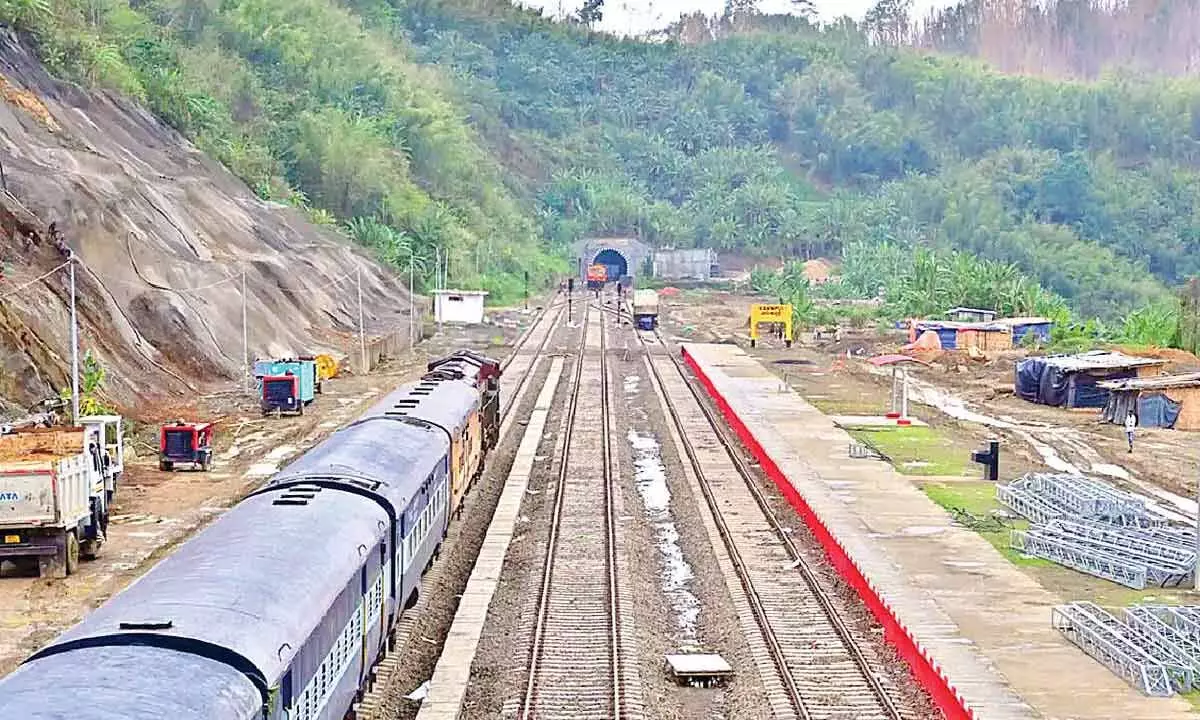
Mizoram has taken a significant step forward with the opening of the Bairabi–Sairang railway line. This new connection promises to transform the region’s economy and bring the remote state closer to the rest of India.
Costing over ₹8,000 crore, this 51-kilometer railway links Aizawl, the state capital, to India’s vast railway network for the first time. The railway overcomes challenging landscapes with remarkable engineering, including tall bridges and lengthy tunnels.
For Mizoram’s residents, who have long depended on narrow, landslide-prone roads, this railway signifies much more than modern infrastructure. It’s a promise of cheaper goods, quicker access, and dependable connections. Experts predict transportation costs for essentials like fuel and groceries could reduce by 30–40%, leading to a potential drop in consumer prices by 10–20% in many areas.

“This railway is crucial for Mizoram,” said a CPRO, highlighting how it will “transform connectivity, reduce costs, and open opportunities for both small traders and large industries.” For farmers, who represent a significant part of the workforce, this line will minimize crop losses. Perishable goods like pineapples and ginger can reach larger markets in Assam and West Bengal before spoiling, thus increasing farmers’ incomes.
Tourism is also set to grow as Mizoram’s natural beauty and culture become more accessible. Industry experts anticipate a 40–50% rise in tourist arrivals over the next five years, benefiting local businesses like homestays and handicraft vendors.
“Tourism will immediately benefit,” noted the CPRO, stressing that “Mizoram can now display its charm without the barrier of poor connectivity.” The railway’s impact on jobs is notable too. Thousands worked on its construction, and many more are expected to find employment in related sectors like logistics and retail, with forecasts of 3,000–5,000 new jobs annually.
Local industries, from bamboo crafts to textiles, will gain better access to larger markets, reducing reliance on middlemen. Besides economic benefits, the railway is set to improve daily life, allowing students to travel for education more cheaply, patients to access medical care faster, and ensuring supplies reach schools and hospitals more reliably, especially during the monsoon.
Strategically, the Bairabi–Sairang line strengthens India’s Act East policy, enhancing integration with Assam and potentially linking to trade routes in Myanmar and Southeast Asia. Economists estimate this railway could add ₹500–700 crore to Mizoram’s GDP annually, boosting growth by 2–3%.
However, challenges remain. Maintaining the railway through rugged terrain will need ongoing investment, and environmental protections must be upheld. Policies must also ensure that benefits reach remote communities, not just urban centers.
Despite these challenges, there’s a sense of optimism in Mizoram, with the railway tracks symbolizing a long-awaited dream realized. As the CPRO stated, “Railways have always driven progress, and with this project, Mizoram finally joins the national rail family.”
This railway is not just about trains; it’s about growth, opportunity, and hope. If used wisely, the Bairabi–Sairang railway will not only transport trains but also lead Mizoram into a new era of economic strength, social progress, and broader integration with the world.