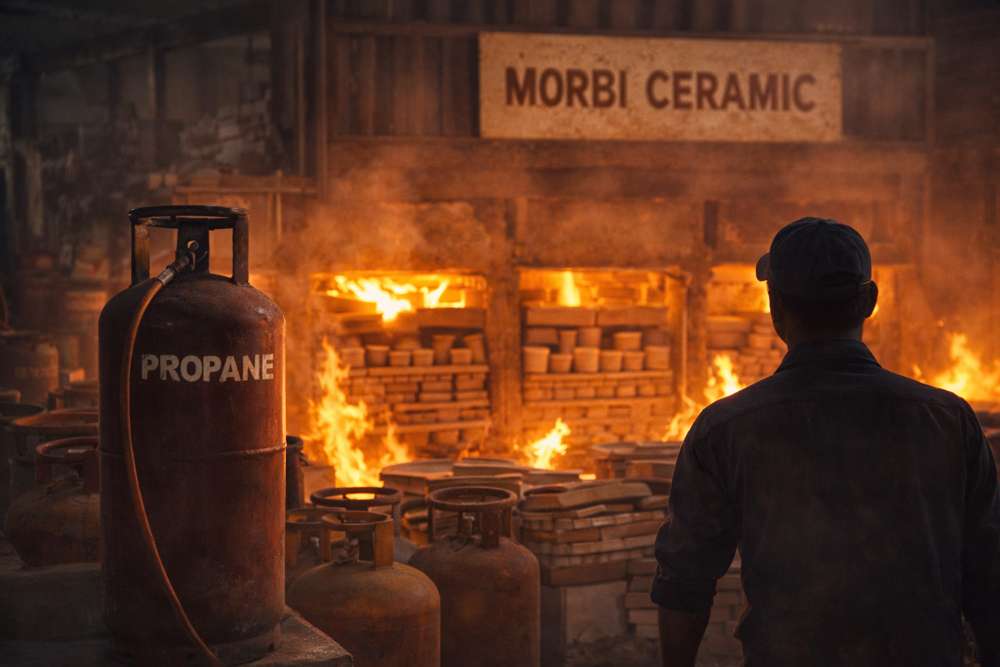
The ceramic manufacturing hub of Morbi in Gujarat, which produces nearly 80–90% of India’s ceramic tiles and sanitaryware, is facing a serious industrial crisis as disruptions in propane and natural gas supplies threaten to halt production across hundreds of factories.
The problem has intensified due to global energy disruptions linked to the ongoing geopolitical tensions in the Middle East, which have affected fuel shipments that many ceramic manufacturers depend on. Propane gas, a key fuel used to fire high-temperature kilns in ceramic production, has become scarce in recent days.
Morbi is widely regarded as one of the largest ceramic manufacturing clusters in the world, housing more than 600 industrial units involved in the production of ceramic tiles, vitrified tiles, sanitaryware, and related construction materials. The industry plays a critical role in India’s construction sector and supplies products to both domestic and international markets.
Industry estimates indicate that 70–80% of ceramic units in the region rely heavily on propane for their kiln operations. With propane supplies drying up and natural gas allocations being restricted, several manufacturing units have already slowed or temporarily halted operations.
Fuel supply disruptions have also affected companies receiving gas through industrial suppliers such as Gujarat Gas and Indian Oil Corporation. Limited availability of regasified liquefied natural gas (R-LNG) and propane has created uncertainty for manufacturers who operate energy-intensive furnaces that cannot easily switch to alternative fuels.
The crisis is not limited to fuel shortages alone. The ceramic sector is also experiencing disruptions in its export supply chains, particularly to markets in the Middle East. Shipping routes through the Gulf region have been affected by the ongoing conflict, while freight costs have increased sharply, further squeezing the margins of manufacturers.
The Morbi ceramic cluster has become a major pillar of India’s industrial economy. The sector generates an estimated annual turnover of around ₹50,000 crore and exports ceramic products worth approximately ₹18,000 crore to more than 150 countries. The industry also supports a large ecosystem of traders, transporters, packaging units, and suppliers.
Employment concerns are also emerging as a major challenge. The Morbi ceramic industry provides direct and indirect employment to several lakh workers, including skilled technicians, migrant labourers, logistics operators, and support staff. Any prolonged shutdown could significantly affect livelihoods across the region.
Manufacturers are currently attempting to manage operations using existing fuel inventories, but these reserves are limited and expected to last only a few days in many factories. If fuel supplies are not restored quickly, a wider shutdown across the ceramic cluster could become unavoidable.
Industry stakeholders are now seeking urgent intervention from authorities to stabilise fuel supply chains or explore alternative energy solutions. Without immediate relief, the disruption could have a ripple effect on India’s construction material supply, export commitments, and global ceramic trade position.
As the geopolitical situation continues to evolve, Morbi’s ceramic industry remains on edge, closely monitoring fuel availability and international developments that could determine whether production can continue or factories are forced to suspend operations in the coming days.