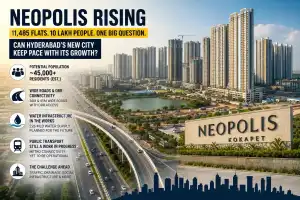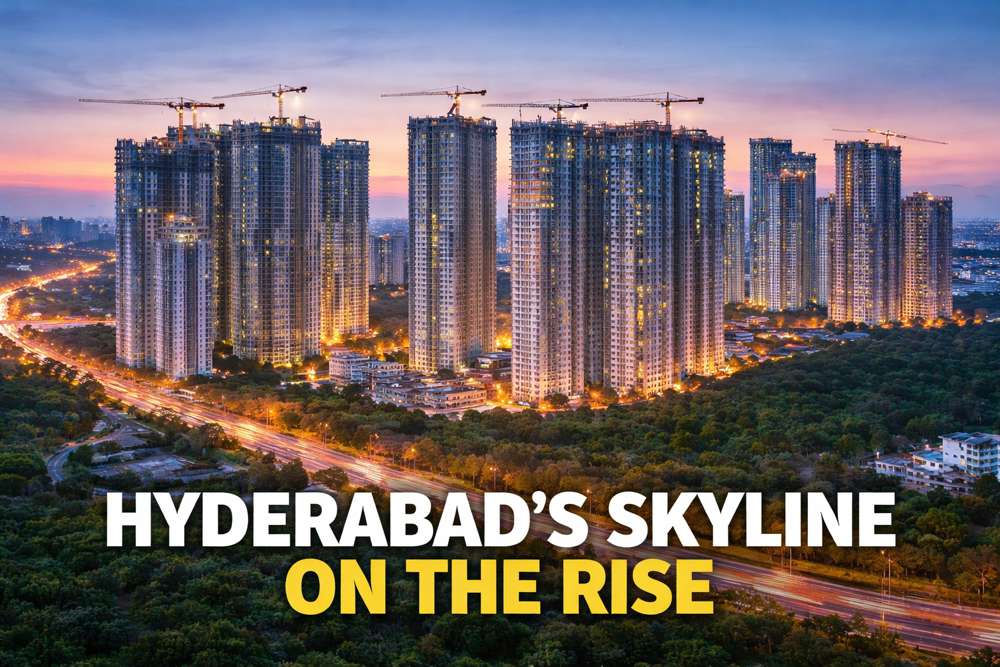
Hyderabad’s skyline is poised for a major transformation over the next few years, with dozens of new skyscrapers expected to rise along the city’s IT corridor by 2029–30. Despite periodic slowdowns in the real estate sector, the city continues to witness strong momentum in high-rise residential and mixed-use developments, particularly in the western parts of Hyderabad.
According to estimates, Hyderabad currently has around 1,800 high-rise buildings, making it one of the leading cities in South India in terms of vertical growth. Of these, about 1,300 towers fall within GHMC limits, while the remaining developments are spread along the Outer Ring Road under the jurisdiction of HMDA. Industry experts say no other southern city has seen such a rapid rise in tall residential towers over the past decade.
Western Corridor Drives Vertical Growth
Areas such as Kokapet, Tellapur, Narsingi, and Gachibowli have emerged as hotspots for skyscraper projects, driven by proximity to IT hubs, improved road infrastructure, and availability of large land parcels. Developers are increasingly opting for vertical construction to maximise land use and meet demand from professionals working in the technology and financial sectors.
Some of the tallest residential buildings in the city are coming up in these zones, with towers ranging from 50 to 70 floors. Locations like Osman Nagar and Kokapet are witnessing projects that exceed 200 metres in height, reshaping Hyderabad’s urban profile.
Large Projects Receive Approvals
HMDA officials have recently approved several large-scale residential projects in Kokapet. One such development spans over 21 acres and includes a single residential block with multiple basements, a ground floor, and over 60 upper floors, housing more than 350 apartments.
Another major project in the same locality covers nearly 7.7 acres and consists of five high-rise blocks, each rising above 50 floors, with a combined built-up area running into several lakh square feet. Officials note that while approvals had slowed earlier, the past three years have seen a sharp recovery in the pace of clearances.
Changing Regulations and Infrastructure Push
Urban planners point out that in areas with limited road width, building heights are still restricted to lower limits. However, where road infrastructure and Transferable Development Rights (TDR) are favourable, permissions are increasingly being granted for towers exceeding 30 floors.
Developers are also branding high-rise projects with premium amenities such as sports arenas, landscaped decks, co-working spaces, and enhanced security systems to attract buyers in a competitive market.
Rising Costs and Premium Pricing
While high-rise living is gaining popularity, developers acknowledge that taller buildings come with higher construction and maintenance costs. Expenses related to lifts, power backup, safety systems, and long-term upkeep push prices upward.
In many of these premium projects, apartment prices are reaching ₹7,000 to ₹8,000 per square foot on average, with some luxury units crossing the ₹10,000 per square foot mark. Maintenance charges are also higher compared to conventional apartment complexes.
Outlook for the City
Despite cost pressures and market fluctuations, Hyderabad’s steady job creation, expanding infrastructure, and sustained demand for housing continue to support high-rise development. With multiple large projects already approved and many more in the pipeline, the city’s skyline is expected to look markedly different by the end of the decade.
Urban experts say this vertical growth reflects Hyderabad’s evolution into a major global city, balancing horizontal expansion with dense, infrastructure-led development.