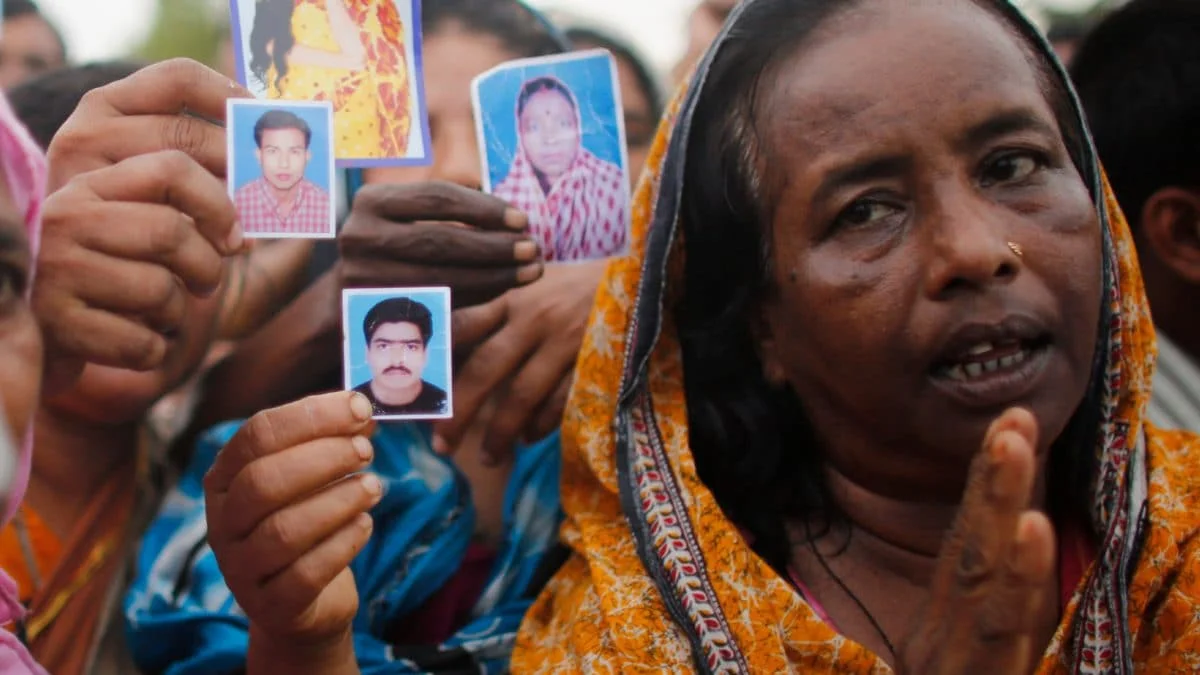
Sumi Akhter, a garment worker in Bangladesh, was forced to start her shift at the Rana Plaza factory complex or risk losing her wages. An hour later, the building collapsed, killing over 1,130 people. Akhter’s mother also worked in the complex and died in the disaster. Both women were hesitant to return to work after the building was evacuated due to cracks in the structure. Akhter says that if management had told them not to enter the building, many people’s lives could have been saved. The collapse highlighted the fashion industry’s reliance on dangerous conditions for workers in developing countries.
Ten years after the catastrophe, more than half of the 2,000 survivors are unemployed and many suffer from psychological trauma. Akhter had to have her leg amputated and is unable to return to work. The trial against 38 people indicted for murder in connection with the disaster has been delayed, and witnesses say that employees were forced to work despite the building’s structural issues.
The disaster prompted foreign brands, unions, and manufacturers to create watchdogs that have led to improvements in safety standards. However, labour rights groups warn that the new safety audit system has limits and that factory managers can influence worker interviews. Despite this, the overhaul has cost manufacturers over $2 billion and resulted in phenomenal growth in export orders from foreign brands. Garment exports from Bangladesh have doubled to $45 billion in the past decade, while average wages have tripled. However, the Rana Plaza building remains a painful memory for many workers.