The Central Government’s Economic Survey 2026 has recognised Telangana as a national leader in agricultural transformation, highlighting the state’s remarkable achievements in irrigation and water conservation. The survey specifically praised the state’s combination of large-scale engineering projects and traditional water management systems that have revolutionised farming in the region.
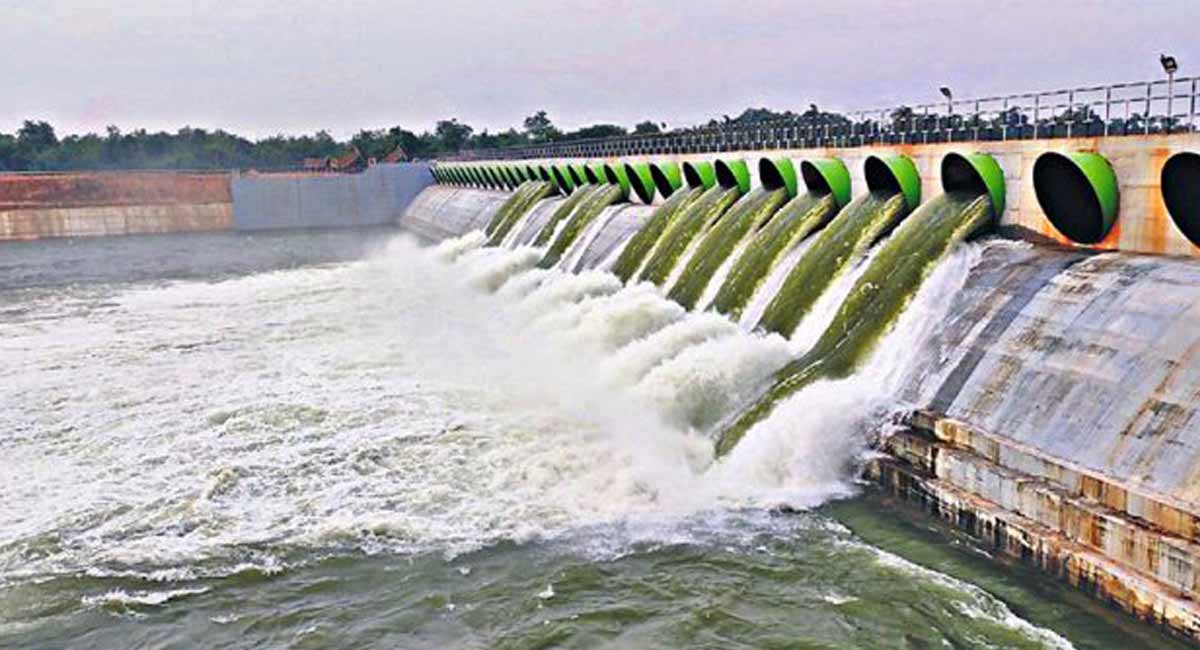
According to the survey, Telangana has successfully doubled its cultivated area in just over a decade, expanding from 1.31 crore acres in 2014 to 2.21 crore acres in 2025-26. This dramatic increase was made possible through the implementation of the Kaleshwaram Lift Irrigation Project (KLIP) and Mission Kakatiya, both of which have transformed the state’s agricultural landscape.

The report lauded the synergy between KLIP and Mission Kakatiya, noting how the lift irrigation project overcame topographical barriers to deliver water to high-altitude regions. Meanwhile, Mission Kakatiya revitalised over 46,000 tanks across the state, providing last-mile water distribution and enabling groundwater recharge. This dual approach has ensured year-round water availability, enabling Telangana to emerge as a top contributor to the national foodgrain pool and stabilising India’s food security despite erratic monsoon patterns in other regions.
The survey gave special recognition to the current Congress government’s Bhu Bharati portal, which has integrated the Revenue, Stamps and Registration departments into a single transparent digital platform. The portal introduced the 11-digit Bhudhaar ID, a unique identification number for every land parcel that functions like an Aadhaar card for land, making duplication and identity fraud nearly impossible. The system has expanded digital Pahani records to include 11 critical columns capturing historical ownership, current cultivator details and land use patterns.
The Central Government appreciated Telangana’s use of drones and satellite-based rovers to create centimetre-accurate GIS-based maps of land parcels. These maps are now accessible online, allowing buyers to verify exact boundaries before purchasing property. The integration with the IGRS (Registration) system has reduced the risk of double registration and hidden encumbrances, boosting investor confidence in the state’s real estate market.
The survey also recognised Telangana as one of six states to fully implement the GPS-based Vehicle Location Tracking System (Anna Chakra) for monitoring real-time movement of foodgrains, significantly reducing leakages. The state received additional recognition for removing restrictions on women working in a wider range of industries and streamlining fire safety regulations through third-party accredited agencies.
District-wise analysis revealed significant impacts across the state. In northern districts like Rajanna Sircilla and Karimnagar, groundwater levels rose by 5-10 meters, with the Mid-Manair and Lower Manair dams enabling farmers to cultivate up to three crops annually. Jagtial and Nirmal witnessed a 40 per cent increase in paddy and maize production. Central districts like Siddipet and Medak saw the creation of Konda Pochamma Sagar and Mallanna Sagar reservoirs, transforming semi-arid zones into fertile belts and spurring growth in dairy and fisheries sectors.
In southern Telangana, districts like Nalgonda and Mahabubnagar, once known as the drought capital of the state, have become primary beneficiaries of the tank restoration programme. The revitalisation of over 8,000 tanks has lowered fluoride levels in groundwater and improved soil fertility. In Warangal, the restoration of heritage tanks like Ramappa and Pakhal has secured irrigation while providing livelihoods for over 50,000 fishermen, boosting the rural blue economy.