Hyderabad is facing a significant issue as a recent drug bust at Mahindra University has uncovered a larger network involving multiple prestigious institutions. The Telangana Anti-Narcotics Bureau (TANB) has revealed that this case is just a small part of a widespread drug operation in the city.
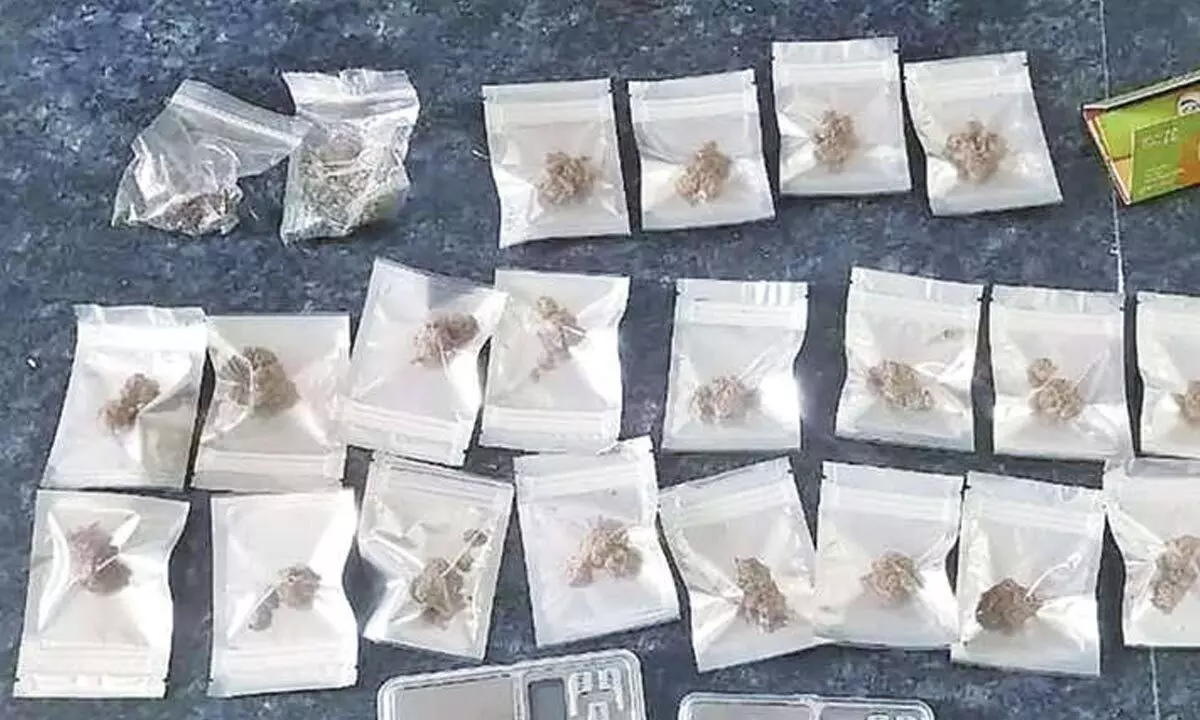
On August 27, authorities arrested four people, including two students, at Mahindra University for running a drug operation. Earlier, a raid in Shivalayam Colony, Suraram led to the seizure of 1.15 kg of ganja, 47 grams of high-quality OG weed, packaging materials, a digital scale, and several mobile phones used for drug trafficking.
Investigators have found a supply chain linking interstate suppliers to student dealers on campus, with about 50 students currently under scrutiny for drug use. The main suspect, a Nigerian named “Nick,” is still on the run. Officials believe capturing him could reveal more about an international drug network. The TANB notes that many individuals from Nigeria, Somalia, and Sudan enter India on tourist or student visas and often stay illegally to engage in illicit activities.

The investigation highlights how courier and parcel services are frequently used for drug trafficking, as they often bypass strict security checks that passengers face at airports. Officials admit challenges in tracking irregularly packed parcels, which often lack proper authentication and address details.
Drug use extends beyond Mahindra University, affecting other prestigious institutions like Symbiosis and CBIT. Students often misuse their pocket money for drugs, leading to dependency and risky behavior. Neha Agarwal, a psychologist and co-founder of InnerHeal Therapy, explains that students often turn to drugs to fill emotional voids, seeking acceptance or escaping fears, which can lead to addiction.
The authorities emphasize the importance of strict monitoring and rehabilitating affected students. A student recently caught in the bust is undergoing regular health checks and counseling. The TANB is also partnering with universities like ICFAI to raise awareness about the risks of substance abuse.
Mahindra University has stated its commitment to dealing harshly with any illegal activities and ensuring student safety. Vice-Chancellor Dr. Yajulu Meduri has promised increased preventive measures, counseling, and collaboration with law enforcement.
As more universities are implicated in drug activities and courier loopholes persist, the situation reveals a troubling reality. While Hyderabad’s private universities aim to be global education centers, they are increasingly becoming hotspots for organized crime exploiting the vulnerabilities of young students.