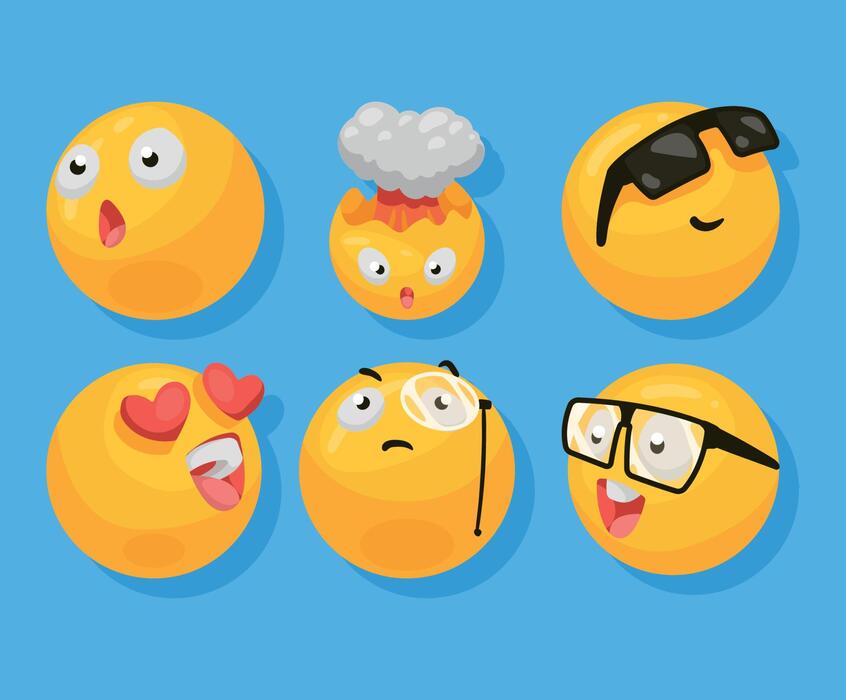
Every day, billions of people send emojis without giving them much thought. A smiling face softens a text, a heart expresses affection, and a pair of folded hands conveys gratitude. These tiny digital icons have become an inseparable part of modern communication.
But have you ever wondered who decides which emojis appear on your phone? Or why there is an emoji for bubble tea but not for your favourite local snack? Surprisingly, the answer lies with a little-known organisation that quietly shapes one of the world’s most widely used visual languages.
Who Is Behind Every Emoji?
Contrary to popular belief, emojis are not created by Apple, Google, Samsung, or WhatsApp.
The responsibility lies with the Unicode Consortium, a non-profit organisation based in California that develops the global standard for digital text and emojis. Since emojis need to appear consistently across different devices and operating systems, the Unicode Consortium decides which new emojis become part of the universal keyboard.
Once an emoji is approved, companies such as Apple, Google, Microsoft, and Samsung design their own visual versions, while keeping the meaning consistent across platforms.
It Is More Complicated Than It Looks
Adding a new emoji is far more rigorous than simply drawing a new icon.
Every year, the Unicode Consortium reviews proposals submitted from around the world. These proposals undergo a detailed evaluation process before any decision is made.
The committee considers several questions:
- Will many people actually use this emoji?
- Does it represent something missing from the current emoji library?
- Is it likely to remain relevant for years rather than being a passing trend?
- Can its meaning be understood across different cultures?
The aim is to ensure that every new emoji has broad and lasting value, rather than reflecting temporary internet trends.
Can Anyone Suggest a New Emoji?
Perhaps the most surprising fact is that almost anyone can propose a new emoji.
Designers, organisations, researchers, companies, and even ordinary users have successfully submitted proposals. However, suggesting a new emoji involves much more than sending an email.
Applicants must prepare a detailed proposal explaining why the emoji deserves a place on millions of keyboards. They need to demonstrate its expected popularity, explain how it differs from existing emojis, and show why it would have long-term cultural significance. Only a small number of proposals are approved each year.
Why Some Emojis Never Make It
Not every idea reaches your smartphone.
Many proposed emojis are rejected because they are considered too specific, too similar to existing symbols, or unlikely to be widely used.
The Unicode Consortium also avoids approving emojis that represent short-lived internet memes, commercial brands, or niche trends that may quickly become outdated. Its goal is to build an emoji library that remains meaningful across countries, cultures, and generations.
How Emojis Reflect Society
The emoji keyboard has changed dramatically over the years.
Early emojis mainly featured smiley faces, weather symbols, and simple objects. Today’s collection includes different skin tones, gender-inclusive characters, people with disabilities, cultural attire, diverse family structures, and a wider range of professions. These additions reflect a growing effort to ensure that digital communication mirrors the diversity of the real world. In many ways, the evolution of emojis tells the story of how society itself has evolved.
More Than Just Tiny Pictures
Today, emojis have become far more than decorative icons.
They help convey tone, soften difficult conversations, express humour, and communicate emotions that plain text sometimes cannot. In workplaces, classrooms, family chats, and friendships, they have become an essential part of everyday language. Although they occupy only a few pixels on a screen, their influence extends far beyond digital conversations.
A Language Still Being Written
Unlike printed dictionaries that are updated every few years, the emoji keyboard continues to evolve alongside society.
Every newly approved symbol reflects changing lifestyles, emerging conversations, and the ways people choose to express themselves.
On World Emoji Day, it is easy to see emojis as playful additions to our messages. Yet behind every tiny icon lies months of discussion, careful evaluation, and global collaboration. The next time you open your keyboard, remember that every emoji has earned its place—not by chance, but through a process that quietly shapes one of the world’s fastest-growing visual languages.